The
60 spacecrafts launched in 1961:.
...
Spacecraft
Entries
.
Mercury-Redstone 2
| Spacecraft: |
Spacecraft no. 5 |
| Chronologies: |
1961 payload #1 ; n/a ; 100th spacecraft. |
| Type: |
Piloted spaceship test |
| Sponsor: |
NASA |
|
|
|
.
Samos 2
| Spacecraft: |
Program 101; E-1 payload |
| Chronologies: |
1961 payload #2 ; 1961-001A ; 101st spacecraft. |
| Type: |
Reconnaissance |
| Sponsor: |
U.S. National Reconnaissance Office |
|
|
|
.
Venera
| Spacecraft: |
1VA No. 1 |
| Chronologies: |
1961 payload #3 ; 1961-002A ; 102nd spacecraft. |
| Type: |
Venus probe |
| Families: |
21st planetary probe (12th Soviet) |
| Sponsor: |
Soviet Union (Korolev's Design Bureau) |
|
|
|
.
Venera 1
| Spacecraft: |
1VA No. 2 |
| Chronologies: |
1961 payload #4 ; 1961-003A ; 103rd spacecraft. |
| Type: |
Venus probe |
| Families: |
22nd planetary probe (13th Soviet) |
| Sponsor: |
Soviet Union (Korolev's Design Bureau) |
|
|
| Launch: |
12 February 1961 at 0h34 UTC,
Baykonur Cosmodrome's LC-1, by an A-1/"Molniya" (8K78 L1-7). |
| Orbit: |
|
| Decayed: |
|
| Mission: |
The Soviet Union launched the first probe
toward Venus. President Kennedy congratulated Premier Khrushchev on this
“impressive scientific achievement.”
In February 1963,
Soviet Prof. A. Martynov, director of State Astronomical Institute of Kiev,
said Soviet Venus probe undoubtedly had reached its objective and
probably landed on Venus. U.S. sources had said the probe was launched
at too high a velocity to have been orbited around Venus. Martynov also
said results of Soviet radioastronomy experiments with Venus indicated
Venutian surface temperatures range from 100° C on dark side and about
300 to 400° C on the sunlighted side, conclusions differing from those
of data provided by U.S. |
| Source: |
Jonathan
McDowell's
Master
List ; Mark
Wade’s Encyclopedia Astronautica ; National
Space Science Data Center's 1960-003A
; TRW Space Log ; Aeronautical
and Astronautical Events of 1963, p. 74-5 ; |
|
|
.
Explorer 9
| Spacecraft: |
NASA S-56A |
| Chronologies: |
1961 payload #5 ; 1961-004A ; 104th spacecraft. |
| Type: |
Easth/space science |
| Sponsor: |
NASA |
|
|
| Launch: |
16 February 1961 at 13h12 UTC,
from Wallops Island's LA-3, by a Scout X-1 (ST-4). |
| Orbit: |
|
| Decayed: |
|
| Mission: |
Explorer IX was a light-weight, 3.7-meter-diameter
balloon which became NASA’s most effective satellite for measuring atmospheric
density and temperature. It provided a better understanding of upper atmosphere
characteristics, determining more precisely the relationships between air
density and solar radiations. The satellite re-entered Earth‘s atmosphere
on 9 April 1964 and disintegrated after more than three years in space.
It traveled more than 550 million km during its 14,000 orbits of the earth.
Explorer IX was the first satellite orbited by a solid-fuel launch vehicle
(Scout) and the first satellite launched at Wallops. Measurements of atmospheric
drag effects were correlated with those of a similar inflated sphere, Explorer
XIX, orbited in 1963. |
| Source: |
Jonathan
McDowell's
Master
List ; Mark
Wade’s Encyclopedia Astronautica ; National
Space Science Data Center's 1961-004A
; NASA, Aeronautical
and Astronautical Events of 1961, p.7 ; Astronautical
Events of 1964, p. 131-2 ; |
|
|
.
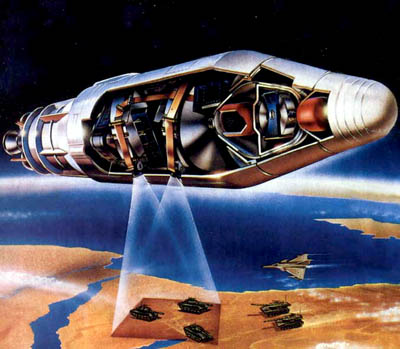
Discoverer 20 / CORONA
9014A (ARGON) / KH-5
| Spacecraft: |
|
| Chronologies: |
1961 payload #6 ; 1961-005A ; 105th spacecraft. |
| Type: |
Reconnaissance |
| Sponsor: |
U.S. National Reconnaissance Office |
|
 |
|
.
Discoverer 21 / CORONA
RM 2
| Spacecraft: |
|
| Chronologies: |
1961 payload #7 ; 1961-006A ; 106th spacecraft. |
| Type: |
Technology (Missile early warning) |
| Sponsor: |
U.S. National Reconnaissance Office |
|
|
|
.
MA-2 / Mercury-Atlas
2
| Spacecraft: |
Spacecraft no. 6 |
| Chronologies: |
1961 payload #8 ; n/a ; 107th spacecraft. |
| Type: |
Piloted spaceship |
| Sponsor: |
NASA |
|
|
|
.
Transit 3B
| Spacecraft: |
|
| Chronologies: |
1961 payload #9 ; 1961-007A ; 108th spacecraft. |
| Type: |
Navigation |
| Sponsor: |
U.S. Navy |
|
|
|
.
Lofti 1
| Spacecraft: |
|
| Chronologies: |
1961 payload #10 ; 1961-007A ; 109th spacecraft. |
| Type: |
Technology |
| Sponsor: |
U.S. Navy |
|
|
|
.
Explorer S-45
| Spacecraft: |
NASA S-45 ; P-14 |
| Chronologies: |
1961 payload #11 ; 1961 1st loss ; 110th
spacecraft. |
| Type: |
Easth/space science |
| Sponsor: |
NASA |
|
|
|
.
Koralb Sputnik 4
| Spacecraft: |
Vostok-3 No. 1 |
| Chronologies: |
1961 payload #12 ; 1961-008A ; 111th spacecraft. |
| Type: |
Piloted spaceship test |
| Sponsor: |
Soviet Union (Korolev's Design Bureau) |
|

(Artwork: Robert Giguère)
|
|
.
Koralb Sputnik 5
| Spacecraft: |
Vostok-3 No. 2 |
| Chronologies: |
1961 payload #13 ; 1961-009A ; 112th spacecraft. |
| Type: |
Piloted spaceship test |
| Sponsor: |
Soviet Union (Korolev's Design Bureau) |
|
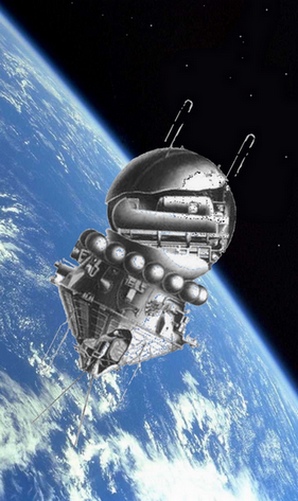
(Artwork: Robert Giguère)
|
|
.
Explorer 10
| Spacecraft: |
P-14 |
| Chronologies: |
1961 payload #14 ; 1961-010A ; 113th spacecraft. |
| Type: |
Easth/space science |
| Sponsor: |
NASA |
|
|
|
.
Discoverer 22 / CORONA
9015 / KH-2
| Spacecraft: |
|
| Chronologies: |
1961 payload #15 ; 1961 2nd loss ; 114th
spacecraft. |
| Type: |
Reconnaissance |
| Sponsor: |
U.S. National Reconnaissance Office |
|
|
|
.
Discoverer 23 / CORONA
9016A / KH 5
| Spacecraft: |
|
| Chronologies: |
1961 payload #16 ; 1961-011A ; 115th spacecraft. |
| Type: |
Reconnaissance |
| Sponsor: |
U.S. National Reconnaissance Office |
|
|
|
.
Vostok
| Spacecraft: |
Vostok-3A No. 3 |
| Chronologies: |
1961 payload #17 ; 1961-012A ; 116th spacecraft. |
| Type: |
Piloted spaceship |
| Sponsor: |
Soviet Union (Korolev's Design Bureau) |
|
|
| Launch: |
12 April 1961 at 6h07 UTC, from
Baykonur Cosmodrome'sLC-1, by an A-1/Vostok (8K72K E103-16).
(The launch took place at 9 hr. 6 min. 59.7
sec., Moscow Time*) |
| Orbit: |
|
| Deorbit: |
12 April 1961 at 7h47 UTC |
| Mission: |
The Vostok spacecraft was launched from the
5 NIIP test range carrying pilot-astronaut of the Soviet Union, Major of
the Soviet Military Air Forces Yuriy Alexeevich Gagarin. At 6h18 UTC the
Blok-E third stage shut down and separated leaving the Vostok spaceship
in orbit. After one orbit, the spaceship landed near Saratov at 7h47 UTC.
The pilot ejected at around 7h43 UTC and landed nearby by parachute a few
minutes later. |
| Source: |
Jonathan
McDowell's
Master
List ; Mark
Wade’s Encyclopedia Astronautica ; National
Space Science Data Center's 1961-012A
; TRW Space Log ; Jonathan
Space Report No. 451
* According to Boris Chertok's Memoir,
Vol. 3, p. 80) |
|
|
.
MA-3 / Mercury-Atlas
3
| Spacecraft: |
Spacecraft no. 8 |
| Chronologies: |
1961 payload #18 ; 1961 3rd loss ; 117th
spacecraft. |
| Type: |
Piloted spaceship test |
| Sponsor: |
NASA |
|
|
|
.
Explorer 11
| Spacecraft: |
NASA S-15 |
| Chronologies: |
1961 payload #19 ; 1961-013A ; 118th spacecraft. |
| Type: |
Easth/space science |
| Sponsor: |
NASA |
|
|
|
.
Mercury 3 (MR-3 / Mercury-Redstone
3)
| Spacecraft: |
Spacecraft no. 7 / Friendship
7 |
| Chronologies: |
1961 payload #20 ; n/a ; 119th spacecraft. |
| Type: |
Piloted spaceship |
| Sponsor: |
NASA |
|
|
 |
|
Normal sequence of events for Mercury-Redstone
flight. (Source:
NASA)
|
|
.
Explorer S-45A
| Spacecraft: |
NASA S-45A |
| Chronologies: |
1961 payload #21 ; 1961 4th loss ; 120th
spacecraft. |
| Type: |
Easth/space science |
| Sponsor: |
NASA |
|
|
|
.
Discoverer 24 / CORONA
9018A (ARGON) / KH-5
| Spacecraft: |
|
| Chronologies: |
1961 payload #22 ; 1961 5th loss ; 121st
spacecraft. |
| Type: |
Reconnaissance |
| Sponsor: |
U.S. National Reconnaissance Office |
|
|
|
.
Discoverer 25 / CORONA
9017 / KH-2
| Spacecraft: |
|
| Chronologies: |
1961 payload #23 ; 1961-014A ; 122nd spacecraft. |
| Type: |
Reconnaissance |
| Sponsor: |
U.S. National Reconnaissance Office |
|
|
|
.
Transit 4A
| Spacecraft: |
|
| Chronologies: |
1961 payload #24 ; 1961-015A ; 123rd spacecraft. |
| Type: |
Navigation |
| Sponsor: |
U.S. Navy |
|
|
|
.
Injun 1
| Spacecraft: |
|
| Chronologies: |
1961 payload #25 ; 1961-015B ; 124th spacecraft. |
| Type: |
Radiations studies |
| Sponsor: |
U.S. Navy |
|
|
|
.
Solrad 3 / GRAB 3
| Spacecraft: |
|
| Chronologies: |
1961 payload #26 ; 1961-015B ; 125th spacecraft. |
| Type: |
Sun studies |
| Sponsor: |
U.S. Navy |
|
|
|
.
Explorer S-55
| Spacecraft: |
NASA S-55 |
| Chronologies: |
1961 payload #27 ; 1961 6th loss ; 126th
spacecraft. |
| Type: |
Easth/space science |
| Sponsor: |
NASA |
|
|
|
.
Discoverer 26 / CORONA
9019 / KH-2
| Spacecraft: |
|
| Chronologies: |
1961 payload #28 ; 1961-016A ; 127th spacecraft. |
| Type: |
Reconnaissance |
| Sponsor: |
U.S. National Reconnaissance Office |
|
|
|
.
Tiros 3
| Spacecraft: |
Tiros C (A-3) |
| Chronologies: |
1961 payload #29 ; 1961-017A ; 128th spacecraft. |
| Type: |
Meteorology |
| Sponsor: |
NASA |
|
|
|
.
Midas 3
| Spacecraft: |
|
| Chronologies: |
1961 payload #30 ; 1961-018A ; 129th spacecraft. |
| Type: |
Missile early warning |
| Sponsor: |
U.S. Air Force |
|
|
|
.
Mercury 4 (MR-4 / Mercury-Redstone
4)
| Spacecraft: |
Spacecraft no. 11 / Liberty Bell
7 |
| Chronologies: |
1961 payload #32 ; n/a ; 130th spacecraft. |
| Type: |
Piloted spaceship |
| Sponsor: |
NASA |
|
|
|
.
Discoverer 27 / CORONA
9020A (ARGON) / KH-5
| Spacecraft: |
|
| Chronologies: |
1961 payload #31 ; 1961 7th loss ; 131st
spacecraft. |
| Type: |
Reconnaissance |
| Sponsor: |
U.S. National Reconnaissance Office |
|
|
|
.
Discoverer 28 / CORONA
9021 / KH-2
| Spacecraft: |
|
| Chronologies: |
1961 payload #33 ; 1961 8th loss ; 132nd
spacecraft. |
| Type: |
Reconnaissance |
| Sponsor: |
U.S. National Reconnaissance Office |
|
|
|
.
Vostok 2
| Spacecraft: |
Vostok-3A No. 4 |
| Chronologies: |
1961 payload #34 ; 1961-019A ; 133rd spacecraft. |
| Type: |
Pilote spacecraft |
| Sponsor: |
Soviet Union (Korolev's Design Bureau) |
|
|
|
.
Explorer 12
| Spacecraft: |
NASA S-3 (EPE-A) |
| Chronologies: |
1961 payload #35 ; 1961-020A ; 134th spacecraft. |
| Type: |
Easth/space science |
| Sponsor: |
NASA |
|
|
| Launch: |
16 August 1961 at 3h21 UTC, from
Cape Canaveral's LC-17A, by a Delta DM-19 (Thor-Delta 312 / Delta 6). |
| Orbit: |
|
| Decayed: |
|
| Mission: |
Explorer XI1 returned voluminous data revising
previous information on the Van Allen radiation belts and showing them
to be no substantial problem to manned space flight. Transrnitting until
6 December 1961, it returned information amounting to 5,636 telemetry tapes
(730 metres each). Of principal interest was its finding that the Van Allen
belts consist of a preponderance of protons over electrons in a ratio of
1,000 to 1. Since the protons are of less than 1 million electron volts
energy, they do not themselves offer a serious radiation problem and serve
to slow the velocity of other radiation.
On 19 January 1962, scientists described preliminary scientific results
obtained by Explorer XII: based on study of 10 per cent of the data, it
now appears that instead of the two radiation belts (previously called
the inner and outer Van Allen belts) there is one magnetosphere extending
roughly from 650 km above the Earth to 50,000 to 65,000 km out. In this
magnetosphere, there is only a handful of matter but a very wide range
of charged particles trapped by the Earth’s magnetic field. Density of
electrons is now considered to be 108/cm2/sec as o posed to the 10 derived
from previous satellites. Radiation levels of protons in the lower portion
of the magnetosphere were found to be the same as reported by previous
satellites, so that the magnetosphere still poses a formidable radiation
problem to extended manned flight. At about 10 Earth radii, the magnetosphere
ends abruptly. Above it is an extended area, about 20,000 km. across, of
electromagnetic turbulence and featuring very low ener particles on the
order of 1 to 20 kilovolts. Beyond this it ought to be true interplanetary
space. |
| Notes: |
On 25 February 1962, Soviet scientists claimed
to have discovered the third radiation belt around the Earth and published
such findings two years before the findings of Explorer XII were made public
by NASA on January 19, 1962. Academician Blagonravov, Vice President of
the International Committee on Space Research, said in an Izvestia interview
that the existence of a dense belt with energies of 200 to 20,000 electron
volts at a distance of 40,000 to 80,000 km was recorded by Soviet space
launchings in 1958. Such findings, he said, were published by Dr. K. Gringauz
and associates in the February and April issues of the Soviet Academy of
Sciences Proceedings in 1960, and in later publications. Commenting on
the view that the three radiation belts really formed a single large pulsating
band that might be called a imagnetosphere, Blagonravov agreed that the
boundaries might be arbitrary but that the charged particles in each belt
had distinctive characteristics and that it would be inexpedient to reject
the theory of three belts.
On 19 Auguat 1963,
report of new evidence verifying existence of long-lived solar plasma streams
in interplanetary space was based on data gathered by Explorer XII energetic
particles satellite. On two occasions, the satellite observed solar
events producing solar plasma streams. Indication that they were long-lived
was revealed when the plasma streams caused geophysical disturbances more
than 20 days after the streams were created. |
| Source: |
Jonathan
McDowell's
Master
List ; Mark
Wade’s Encyclopedia Astronautica ; National
Space Science Data Center's 1961-020A
; NASA, Aeronautical
and Astronautical Events of 1961, p. 74 ; Aeronautics
and Astronautics, 1962, p. 8, 22 ; Aeronautics
and Astronautics, 1963, p. 318 ; |
|
|
.
Ranger 1
| Spacecraft: |
NASA P-32 / RA-1 |
| Chronologies: |
1961 payload #36 ; 1961-021A ; 135th spacecraft. |
| Type: |
Lunar probe |
| Families: |
23rd planetary probe (10th American) |
| Sponsor: |
NASA |
|
|
|
.
Explorer 13
| Spacecraft: |
NASA S-55A |
| Chronologies: |
1961 payload #37 ; 1961-022A ; 136th spacecraft. |
| Type: |
Easth/space science |
| Sponsor: |
NASA |
|
|
|
.
Discoverer 29 / CORONA
9023 / KH-3
| Spacecraft: |
|
| Chronologies: |
1961 payload #38 ; 1961-023A ; 137th spacecraft. |
| Type: |
Reconnaissance |
| Sponsor: |
U.S. National Reconnaissance Office |
|
|
|
.
Samos 3
| Spacecraft: |
Program 101A ; E-2 payload |
| Chronologies: |
1961 payload #39 ; 1961 9th loss ; 138th
spacecraft. |
| Type: |
Reconnaissance |
| Sponsor: |
U.S. National Reconnaissance Office |
|
|
| Launch: |
9 September 1961 at 19h28 UTC,
from Vandenberg Air Force Base's LC-1-1, by an Atlas-Agena B (Atlas LV-3A
106D / Agena B 2120). |
| Orbit: |
n/a |
| Mission: |
Satellite 2120 was launched as SAMOS 3 with
the 0.9-meter focal length E-2 steerable reconnaissance payload. In addition
to the SAMOS E-2 camera and F-1 ferret, satellite 2120 carried scientific
experiments.(SAMOS 3 was the only Program 101A satellite; a second satellite;
Agena no. 2121, appears never to have been launched.) |
| Launch: |
The Atlas exploded on the pad at the moment
of takeoff. The rocket reached an altitude of 1 meter when the engine shut
down because of a signal from an umbilical cable which failed to detach.
The rocket fell back to the launch pad and exploded. |
| Source: |
Jonathan
McDowell's
Master
List ; Mark
Wade’s Encyclopedia Astronautica ; National
Space Science Data Center's SAMOS3
; TRW Space Log ; Jonathan
McDowell's USAF
imaging programs' 9.3.1:
SAMOS & SAMOS
3 ; |
|
|
.
Discoverer 30 / CORONA
9022 / KH-3
| Spacecraft: |
|
| Chronologies: |
1961 payload #40 ; 1961-024A ; 139th spacecraft. |
| Type: |
Reconnaissance |
| Sponsor: |
U.S. National Reconnaissance Office |
|
|
|
.
MA-4 / Mercury-Atlas
4
| Spacecraft: |
Spacecraft no. 8A |
| Chronologies: |
1961 payload #41 ; 1961-025A ; 140th spacecraft. |
| Type: |
Piloted spaceship test |
| Sponsor: |
NASA |
|
|
|
.
Discoverer 31 / CORONA
9024 / KH-3
| Spacecraft: |
|
| Chronologies: |
1961 payload #42 ; 1961-026A ; 141st spacecraft. |
| Type: |
Reconnaissance |
| Sponsor: |
U.S. National Reconnaissance Office |
|
|
|
.
Discoverer 32 / CORONA
9025 / KH-3
| Spacecraft: |
|
| Chronologies: |
1961 payload #43 ; 1961-027A ; 142nd spacecraft. |
| Type: |
Reconnaissance |
| Sponsor: |
U.S. National Reconnaissance Office |
|
|
|
.
Midas 4
| Spacecraft: |
|
| Chronologies: |
1961 payload #44 ; 1961-028A ; 143rd spacecraft. |
| Type: |
Missile early warning |
| Sponsor: |
U.S. Air Force |
|
|
|
.
Westford
| Spacecraft: |
|
| Chronologies: |
1961 payload #45 ; 1961-028B ; 144th spacecraft. |
| Type: |
Technology |
| Sponsor: |
U.S. Air Force |
|
|
| Launch: |
21 October 1961 at 13:53 UTC,
from Vandenberg Air Force Base's LC-1-2, by an Atlas-Agena B (Atlas LV-3A
105D / Agena B 1202). |
| Orbit: |
|
| Decayed: |
|
| Mission: |
Lincoln Tlaboratory of MIT reported that
examination of telemetry from Midas IV indicated that Project West Ford
package of dipoles had been ejected at the expected time and the proper
speed, but no evidence was available as to whether the dipoles had been
released, and no radar reading had been obtained. Conceived at MIT’s
Lincoln Laboratory, project West Ford proposed placement of 350-million
copper threads (1.8-cm long and 0.0025-cm diameter) into a 8=km wide and
38.6-km lon belt around the Earth from a satellite, which would serve as
reflector antennas for extremely short wave lengths (8,000 megacycles),
perhaps expanding usable frequency channels. |
| Source: |
Jonathan
McDowell's
Master
List ; Mark
Wade’s Encyclopedia Astronautica ; National
Space Science Data Center's 1961-028B
; NASA, Aeronautical
and Astronautical Events of 1961, p. 39 & 62 ; |
|
|
.
Discoverer 33 / CORONA
9026 / KH-3
| Spacecraft: |
|
| Chronologies: |
1961 payload #46 ; 1961 10th loss ; 145th
spacecraft. |
| Type: |
Reconnaissance |
| Sponsor: |
U.S. National Reconnaissance Office |
|
|
|
.
Kosmos
| Spacecraft: |
DS-1 No. 1 |
| Chronologies: |
1961 payload #47 ; 1961 11th loss ; 146th
spacecraft. |
| Type: |
Technology |
| Sponsor: |
Soviet Union's Defense ministry |
|
|
|
.
MS-1 / Mercury-Scout
1
| Spacecraft: |
|
| Chronologies: |
1961 payload #48 ; 1961 12th loss ; 147th
spacecraft. |
| Type: |
Pilote spacecraft test |
| Sponsor: |
NASA |
|
|
|
.
Discoverer 34 / CORONA
9027 / KH-3
| Spacecraft: |
|
| Chronologies: |
1961 payload #49 ; 1961-029A ; 148th spacecraft. |
| Type: |
Reconnaissance |
| Sponsor: |
U.S. National Reconnaissance Office |
|
|
|
.
Discoverer 35 / CORONA
9028 / KH-3
| Spacecraft: |
|
| Chronologies: |
1961 payload #50 ; 1961-030A ; 149th spacecraft. |
| Type: |
Reconnaissance |
| Sponsor: |
U.S. National Reconnaissance Office |
|
|
|
.
Transit 4B
| Spacecraft: |
|
| Chronologies: |
1961 payload #51 ; 1961-031A ; 150th spacecraft. |
| Type: |
Navigation |
| Sponsor: |
U.S. Navy |
|
|
|
.
Traac
| Spacecraft: |
Transit Research and Attitude
Control |
| Chronologies: |
1961 payload #52 ; 1961-031B ; 151st spacecraft. |
| Type: |
Technology |
| Sponsor: |
U.S. Navy |
|
|
| Launch: |
15 November 1961 at 22h19 UTC,
from Cape Canaveral's LC-17B, by a Thor Able-Star (Thor Ablestar
305 AB009?). |
| Orbit: |
|
| Decayed: |
|
| Mission: |
It was expected that TRAAC satellite was
in a position to measure the influence upon the Van Allen belt of the megaton-plus
hydrogen device that exploded on 8 July 1962 at more than 300-kilometres
altitude. Lofted by a Thor rocket from Johnston Island in the Pacific as
a part of Operation Dominic, it was the highest thermonuclear blast ever
achieved and lighted up the Pacific sky from Wake Island to New Zealand,
causing some communication disruption but less than predicted. |
| Notes: |
On 22 July 1963, U.S. Navy
announced it had successfully permanently stabilized an orbiting satellite
through use of 30-meter boom. Difference in gravitational forces acting
on satellite and on end of the boom aligned satellite so that its face
will be permanently pointed toward Earth. As satellite was tumbling through
space with its face toward Earth, boom was released from canister, causing
entire assembly to rock through 40° arc. Weight attached to boom by
12-meter spring bobbed yo-yo fashion, slowing oscillation of boom and satellite
until nearly all sway was removed. Satellite would remain stabilized indefinitely.
Navy announcement said this was first successful stabilization of satellite
without fueled mechanical controls. |
| Source: |
Jonathan
McDowell's
Master
List ; Mark
Wade’s Encyclopedia Astronautica ; National
Space Science Data Center's 1961-031B
; NASA, Aeronautical
and Astronautical Events of 1962, p. 116 ; Aeronautical
and Astronautical Events of 1963, p. 281-2 ; |
|
|
.
Ranger 2
| Spacecraft: |
NASA P-33 (RA-2) |
| Chronologies: |
1961 payload #53 ; 1961-032A ; 152nd spacecraft. |
| Type: |
Lunar probe |
| Families: |
24th planetary probe (11th American) |
| Sponsor: |
NASA |
|
|
|
.
Samos 4
| Spacecraft: |
Program 101B ; E-5 payload |
| Chronologies: |
1961 payload #54 ; 1961 13th loss ; 153rd
spacecraft. |
| Type: |
Reconnaissance |
| Sponsor: |
U.S. National Reconnaissance Office |
|
|
| Launch: |
22 November 1961 at 20h45 UTC,
from Vandenberg Air Force Base's LC-1-1, by an Atlas-Agena B (Atlas LV-3A
108D / Agena B 2202). |
| Orbit: |
n/a |
| Mission: |
USAF launched an unnamed satellite with an
Atlas-Agena booster from Point Arguello, Calif., in first unannounced U.S.
satellite launching. From this point on, a cloak of mystery fell upon the
SAMOS program. SAMOS 4 was notable in that it was the first satellite to
be launched without being identified; it was inferred that the craft was
SAMOS 4 from the launch vehicle and other clues, and this was confirmed
when launch reports were later declassified. The satellite was the first
Program 101B SAMOS and carried the E-5 recoverable capsule. According to
a 1965 memo by the CIA's Albert Wheelon, the E-5 capsule wasdesigned so
that it could be used as a piloted space vehicle for a military counterpart
to NASA's Mercury program. |
| Launch: |
SAMOS 4 failed to reach orbit when its Atlas
first stage pitch control failed after launch. The Atlas separated five
minutes into the flight, and the Agena operated correctly; however because
the Atlas had pitched upward 160 degrees by separation, the Agena started
off pointing down and back to front, and powered itself rapidly towards
the ocean. |
| Source: |
Jonathan
McDowell's
Master
List ; Mark
Wade’s Encyclopedia Astronautica ; National
Space Science Data Center's NNN6101
; TRW Space Log ; Jonathan
McDowell's USAF
imaging programs' 9.3.1:
SAMOS & SAMOS
4 ; NASA, Aeronautical
and Astronautical Events of 1961, p. 66 ; |
|
|
.
MA-5 / Mercury-Atlas
5
| Spacecraft: |
Spacecraft no. 9 |
| Chronologies: |
1961 payload #55 ; 1961-033A ; 154th spacecraft. |
| Type: |
Piloted spaceship test |
| Sponsor: |
NASA |
|
|
|
.
Kosmos
| Spacecraft: |
Zenit-2 No. 1 |
| =Chronologies: |
1961 payload #56 ; 1961 14th loss ; 155th
spacecraft. |
| Type: |
Reconnaissance |
| Sponsor: |
Soviet Union's Defense ministry |
|
|
|
.
Discoverer 36 / CORONA
9029 / KH-3
| Spacecraft: |
|
| =Chronologies: |
1961 payload #57 ; 1961-034A ; 156th spacecraft. |
| Type: |
Reconnaissance |
| Sponsor: |
U.S. National Reconnaissance Office |
|
|
|
.
OSCAR I
| Spacecraft: |
Orbiting Satellites Carrying
Amateur Radio |
| =Chronologies: |
1961 payload #58 ; 1961-034B ; 157th spacecraft. |
| Type: |
Communications (radio-amateur) |
| Sponsor: |
A California's group of radio-amateur |
|
|
| Launch: |
12 December 1961 at 20h40 UTC,
from Vandenberg Air Force Base's LC-75-3-4, by a Thor-Agena B (Thor
325 / Agena B 1119). |
| Orbit: |
211 km x 372 km x 81.2° x 91.8 min |
| Decayed: |
31 January 1962 |
| Mission: |
The 4.5-kg Oscar satellite is the first satellite
built by private citizens to be put in orbit, transmitted Morse signal
to world amateur radio operators. Signal reports on OSCAR I
had been received from radio amateurs throughout the world. No confirmation
was received that OSCAR’s signal was heard behind the Iron Curtain.
The first amateur satellite, OSCAR I, was
launched piggyback with Discover 36, a United States Air Force satellite.
It was the first of the phase I satellites.
A group of enthusiasts in California formed
Project OSCAR and persuaded the United States Air Force to replace ballast
on the Agena upper stage with the 4.5 kg OSCAR I package. The satellite
was box shaped with a single monopole antenna and battery powered. The
140 mW transmitter onboard discharged its batteries after three weeks.
570 Amateurs in 28 countries reported receiving its simple "HI-HI" morse
code signals until 1st January 1962. Because of its low altitude, OSCAR
I only remained in orbit for 22 days before burning up as it re-entered
the earth's atmosphere after 312 revolutions.
OSCAR I was an overwhelming
success. More than 570 amateurs in 28 countries forwarded observations
to the Project OSCAR data reduction center. The observations provided important
information on radio propagation through the ionosphere, the spacecraft's
orbit and thermal satellite design. This mission clearly demonstrated that
amateurs are capable of (1) designing and constructing reliable spacecraft,
(2) tracking satellites and (3) collecting and processing related scientific
and engineering information. OSCAR I led to the creation of The Amateur
Satellite Corporation (AMSAT) in 1969. |
| Source: |
Jonathan
McDowell's
Master
List ; Jonathan
McDowell's Master
List ; Mark
Wade’s Encyclopedia Astronautica ; National
Space Science Data Center's 1961-034B
; NASA, Aeronautical
and Astronautical Events of 1961, p. 73 ; NASA, Aeronautical
and Astronautical Events of 1962, p. 15 ; |
|
|
.
Kosmos
| Spacecraft: |
DS-1 No. 2 |
| Chronologies: |
1961 payload #59 ; 1961 15th loss ; 158th
spacecraft. |
| Type: |
Technology |
| Sponsor: |
Soviet Union's Defense ministry |
|
|
|
.
Samos 5
| Spacecraft: |
Program 101B ; E-5 payload |
| Chronologies: |
1961 payload #60 ; 1961-035A ; 159th spacecraft. |
| Type: |
Reconnaissance |
| Sponsor: |
U.S. National Reconnaissance Office |
|
|
| Launch: |
22 December 1961 at 19h12 UTC,
from Vandenberg: Air Force Base's LC-1-2, by an Atlas-Agena B (Atlas LV-3A
114D / Agena B 2203). |
| Orbit: |
230 km x 650 km |
| Decayed: |
9 January 1962 |
| Mission: |
SAMOS 5 (FTV 2203) was a Program 101B SAMOS
film return satellite with a 1.7-meter focal length panoramic camera. Based
on a 1960 briefing document, the mass breakdown was: 2580 kg on orbit,
including 630 kg Agena dry, 320 kg Agena prop, 730 kg E-5 spacecraft, 900
kg E-5 reflector and RV
The Atlas SECO (main
engine cutoff) came late, giving an extra 0.1 km/s velocity to the Agena.
The orbit achieved was
about 230 x 650 km; without the excess velocity
it would have been about 230 km circular.
The Agena and payload
reentered within a few weeks, with their orbits on 25 December showing
187 km perigees; the recovery attempt was initiated prior to this date,
but failed perhaps because of the high apogee, leaving the Agena and capsule
in a 187 x 300 km orbit.
The announcement
of this USAF satellite said only that it was powered by an Atlas-Agena
B combination and that the satellite was “carrying a num-
ber of classified test components.” |
| Source: |
Jonathan
McDowell's
Master
List ; Mark
Wade’s Encyclopedia Astronautica ; National
Space Science Data Center's 1961-035A
; TRW Space Log ; Jonathan
McDowell's USAF
imaging programs' 9.3.1:
SAMOS & SAMOS
5 ; NASA, Aeronautical
and Astronautical Events of 1961, p. 76 ; |
|
|
|