The
96 spacecrafts launched in 1962:
..
Spacecraft
Entries
.
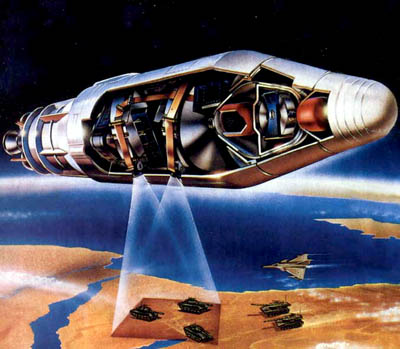
Discoverer 37 / CORONA
9030 / KH-3
| Spacecraft: |
|
| Chronologies: |
1962 payload #1 ; 1962 1st loss ; 160th spacecraft. |
| Type: |
Reconnaissance |
| Sponsor: |
U.S. National Reconnaissance Office |
|
 |
|
.
Solrad 4A / GRAB 4
| Spacecraft: |
SR-4 |
| Chronologies: |
1962 payload #2 ; 1962 2nd loss ; 161st spacecraft. |
| Type: |
Technology |
| Sponsor: |
U.S. Navy |
|
|
|
.
Lofti 2
| Spacecraft: |
|
| Chronologies: |
1962 payload #3 ; 1962 3rd loss ; 162nd spacecraft. |
| Type: |
Technology |
| Sponsor: |
U.S. Navy |
|
|
|
.
Injun 2
| Spacecraft: |
|
| Chronologies: |
1962 payload #4 ; 1962 4th loss ; 163rd spacecraft. |
| Type: |
Technology |
| Sponsor: |
U.S. Navy |
|
|
|
..
Secor 1A
| Spacecraft: |
SEquential COllation of Range |
| Chronologies: |
1962 payload #5 ; 1962 5th loss ; 164th spacecraft. |
| Type: |
Geodesy |
| Sponsor: |
U.S. Navy |
|
|
|
.
Surcal 1A
| Spacecraft: |
|
| Chronologies: |
1962 payload #6 ; 1962 6th loss ; 165th spacecraft. |
| Type: |
Surveillance |
| Sponsor: |
U.S. Navy |
|
|
|
.
Ranger 3
| Spacecraft: |
NASA P-34 / RA-3 |
| Chronologies: |
1962 payload #7 ; 1962-001A ; 166th spacecraft. |
| Type: |
Lunar probe |
| Sponsor: |
NASA |
|
|
| Launch: |
26 January 1962 at 20h30 UTC,
from Cape Canaveral's LC-12, by an Atlas-Agena B (Atlas LV-3A 121D / Agena
B 6003 (AA3)). |
| Orbit: |
|
| Decayed: |
|
| Mission: |
Excessive acceleration by the Atlas 1st-stage
booster caused the 330-kg Ranger III to pass 36,302 kilometres in front
of the Moon on 28 January, instead of impacting as had been planned. Failure
of a high-gain antenna to home on the Earth rendered signals too weak to
provide usable television photographs from the ones Ranger took of the
Moon as it passed it. Ranger III went into orbit around the Sun. The flight
proved out many of the systems within the cratt, including the mid-flight
guidance mechanism. |
| Source: |
Jonathan
McDowell's
Master
List ; Mark
Wade’s Encyclopedia Astronautica ; National
Space Science Data Center's 1962-001A
; NASA, Aeronautical
and Astronautical Events of 1962, p. 10 ; |
|
|
.
Tiros 4
| Spacecraft: |
Tiros D (A-9) |
| Chronologies: |
1962 payload #8 ; 1962-002A ; 167th spacecraft. |
| Type: |
Meteorology |
| Sponsor: |
NASA |
|
|
| Launch: |
8 February 1962 at 12:43 UTC,
from Cape Canaveral's LC-17A, by a Delta DM-19 (Thor Delta 317 / Delta
7). |
| Orbit: |
|
| Decayed: |
|
| Mission: |
TIROS IV featured the same basic types of
equipment as in previous TIROS satellites, including cameras for cloud-cover
photography and infrared sensors to measure temperatures at various levels
in the atmosphere. Principal innovation was a camera with new type of wide-angle
lens covering an area 725 kilometres on a side, which was expected to provide
minimum distortion.
On 14 June 1962,
Tiros IV was no longer transmitting pictures usable for global weather
forecasting, although it was still taking direct pictures on command which
were suitable for limited U.S. weather analysis. Infrared instrumentation
was still providing information on the earth’s heat balance. Tiros IV had
exceeded its designed performance and clarity of pictures from the new
(Tegea) lens was outstanding. It had transmitted some 30,000 pictures to
date. |
| Source: |
Jonathan
McDowell's
Master
List ; Mark
Wade’s Encyclopedia Astronautica ; National
Space Science Data Center's 1962-002A
; NASA, Aeronautical
and Astronautical Events of 1962, p. 14, 100-1 ; |
|
|
.
Mercury 6 (MA-6 / Mercury-Atlas
6)
| Spacecraft: |
Spacecraft No. 13 / Friendship
7 |
| Chronologies: |
1962 payload #9 ; 1962-003A ; 168th spacecraft. |
| Type: |
Piloted spaceship |
| Sponsor: |
NASA |
|
|
| Launch: |
20 February 1962 at 15h47 UTC,
from Cape Canaveral LC-14, by an Atlas D (109D). |
| Orbit: |
|
| Decayed: |
|
| Mission: |
Mercury-Atlas 6 (MA-6) flight – the Friendship
7 capsule with astronaut John H. Glenn onboard – was the first U.S. orbital
manned spaceflight. Glenn was forced to fly by wire (i.e., pilot the spacecraft)
during 2nd and 3rd orbits due to troubles with the automatic pilot. After
three orbits , Friendship 7 re-entered and parachuted into Atlantic some
267 km east of Grand Turk Island in the Bahamas. Picked up by the destroyer
Noa,
Glenn remained inside capsule until on deck. He was pronounced hale and
hearty after his 130,000-km flight of 4 hrs. 56 min. The flight provided
medical data during 285 minutes of weightlessness, including consumption
of solid and liquid food and disorientation exercises. |
| Source: |
Jonathan
McDowell's
Master
List ; Mark
Wade’s Encyclopedia Astronautica ; National
Space Science Data Center's 1962-003A
; TRW Space Log ; Astronautical And Aeronautical Events of 1962,
p. 18. |
|
|
.
Ferret 1
| Spacecraft: |
Program 102 (BK) ; FTV 2301 |
| Chronologies: |
1962 payload #10 ; 1962-004A ; 169th spacecraft. |
| Type: |
Electronic intelligence |
| Sponsor: |
U.S. Air Force |
|
|
|
.
Discoverer 38 / CORONA
9031 / KH-4
| Spacecraft: |
|
| Chronologies: |
1962 payload #11 ; 1962-005A ; 170th spacecraft. |
| Type: |
Reconnaissance |
| Sponsor: |
U.S. National Reconnaissance Office |
|
|
|
.
OSO 1
| Spacecraft: |
S-16 / OSO A ; OS0 stands for
Orbiting Solar Observatory |
| Chronologies: |
1962 payload #12 ; 1962-006A ; 171st spacecraft. |
| Type: |
Sun studies |
| Sponsor: |
NASA |
|
|
| Launch: |
7 March 1962 at 16h06 UTC, from
Cape Canaveral's LC-17A, by a Delta DM-19 (Thor Delta 301 / Delta 8). |
| Orbit: |
547 km x 595 km |
| Decayed: |
|
| Mission: |
OS0 I was the first of a series of satellite
to be launched by NASA in the next 11-year Sun cycle. The 208-kg satellite
immediately began sending back signals on the Sun’s radiation in the ultraviolet,
x-ray, and gamma ray regions from its position above the filtering action
of the Earth’s atmosphere. By an intricate positioning apparatus, 0S0’s
13 instruments were focused constantly on the Sun with a pointing accuracy
of 1-minute of arc. This launch marks the seventh straight success
for the Thor-Delta booster.
OSO I ceased transmission
on 22 May 1962, after 1,138 orbits, having produced for 77 days and provided
300-km of scientific data tape. It observed and measured over 75 solar
flares and subflares. OSO I had provided 1,000 hours of data on its solar-pointed
experiments prior to failure of its real-time telemetry on 22 May 1962.
On 15 May, the tape-recorded playback system had malfunctioned. Data received
from OSO I included information on more than 75 solar flares and subflares.
During 11 weeks of near-perfect operation from launch to 22 May 1962, OSO
I transmitted 1,000 hours of scientific information. Before OSO I, less
than an hour of solar phenomena data had been collected above the Earth’s
atmosphere by all previous rocket’s flight observations.
On 7 March 1963, OS0 I completed its first year in orbit, extending
its estimated operating by six months. Eleven of its 13 scientific experiments
were still operating, having provided more data on behavior and composition
of the Sun than any single ground-based observatory and all previous rocket,
balloon, and satellite flights combined. Preliminary results from OSO I
reported that the satellite had found tentative evidence that solar flares
may be preceded by series of microflares whose sequence and pattern may
be predictable. OSO I recorded at least four of these series during a year
in orbit.
On 6 August 1963,
tracking and data acquisition operations ceased for OSO I. |
| Source: |
Jonathan
McDowell's
Master
List ; Mark
Wade’s Encyclopedia Astronautica ; National
Space Science Data Center's 1962-006A
; NASA ; Aeronautical
and Astronautical Events of 1962, p. 31-2, 84, 104, 114 ; Aeronautical
and Astronautical Events of 1963, p. 85, 93, 299 ; |
|
|
.
Samos 6
| Spacecraft: |
Program 101B ; E-5 payload |
| Chronologies: |
1962 payload #13 ; 1962-007A ; 172nd spacecraft. |
| Type: |
Reconnaissance |
| Sponsor: |
U.S. National Reconnaissance Office |
|
|
| Launch: |
7 March 1962 at 22h10 UTC, from
Vandenberg Air Force Base's LC-1-2, by a Atlas-Agena B (Atlas LV-3A 112D
/ Agena B 2204). |
| Orbit: |
|
| Decayed: |
7 June 1963 |
| Mission: |
“USAF launched an unidentified satellite
with an Atlas-Agena B from Point Arguello, Calif.” The final 101B flight;
although some reports say that the 101 program was cancelled in 1961, the
orbital characteristics of SAMOS 6, the launch photo and the Agena serial
number (2204) place it firmly with the rest of the 101B satellites.
SAMOS 6 probably
entered the desired low orbit, but lost attitude control (recently declassified
documents confirm that control gas was exhausted on orbit 22). A recovery
attempt was made, but the Agena fired in the wrong direction, leaving it
and the E-5 reentry vehicle in a high apogee orbit. |
| Source: |
Jonathan
McDowell's
Master
List ; Mark
Wade’s Encyclopedia Astronautica ; National
Space Science Data Center's 1962-007A
;Aeronautical
and Astronautical Events of 1962, p. 33 ; TRW Space Log ; Jonathan
McDowell's USAF
imaging programs' 9.3.1:
SAMOS & SAMOS
6 ; |
|
|
.
Kosmos 1
| Spacecraft: |
DS-2 No. 1 |
| Chronologies: |
1962 payload #14 ; 1962-008A ; 173rd spacecraft. |
| Type: |
Technology and Earth upper atmosphere studies |
| Sponsor: |
Soviet Union's Defense ministry |
|
|
| Launch: |
16 March 1962 at 11h59 UTC, from
Kapustin Yar Cosmodrome's Mayak-2, by a Kosmos B-1 (63S1 6LK). |
| Orbit: |
|
| Decayed: |
|
| Mission: |
Kosmos 1, the 16th Russian
satellite put into orbit was, as presented by TASS news agency, a scientific
satellite for measurements of meteoric impacts, low-energy solar radiation,
Earth’s radiation belts, cosmic rays, Earth’s magnetic field, short-wave
radiation from Sun and other celestial sources, and atmospheric cloud patterns.
With this launch, Premier Khrushchev claimed that the U.S.S.R. had a new
“invulnerable global rocket,” But unkwown at the time was the fact
it is the 3rd launch of the new Kosmos B-1,
the first two previous launches were faiured. This mission marks
the first launch of the famous thousands-longes series of Kosmos satellites. |
| Source: |
Jonathan
McDowell's
Master
List ; Mark
Wade’s Encyclopedia Astronautica ; National
Space Science Data Center's 1962-008A
; NASA, Aeronautical
and Astronautical Events of 1962, p. 36 ; |
|
|
|
An historic news announcement
On 16 March 1962, the TASS news
agency publsshed a news release which presents the launch of the first
Kosmos satellite and gives the official description of the goals for all
the 2500 satellites of this series that will be launched between 1962 and
2013 and which included mainly military satellites as well as disguised
failures:
| A series of artificial Earth
satellites will be launched from different cosmodromes of the Soviet Union
during 1962. Another launching of an artificial Earth satellite was carried
out in the Soviet Union on 16 March 1962…
The launching of the artifical
Earth satellite continues the current program of studying the upper layers
of the atmosphere and outer space in fulfillment of which a series of satellite
launchings will be effected under this program from different cosmodromes
of the Soviet Union in the course of 1962. The scientific program includes:
The study of the concentration of charged particles in the ionosphere for
investigating the propagation of radio waves; a study of corpuscular flows
and low energy particles; study of the energy composition of the radiation
belts of the Earth for the purpose of further evaluating the radiation
dangers of prolonged space flights; study of the primary composition and
intensity variation of cosmic rays; study of the magnetic field of the
Earth; study of the short wave radiation of the Sun and other celestial
bodies; study of the upper layers of the atmosphere; study of the effects
of meteoric matter on construction elements of space vehicles; and study
of the distribution and formation of cloud patterns in the Earth's atmosphere.
Moreover, many elements of space
vehicle construction will be checked and improved. The launching of sputniks
of this series will be announced in separate reports. This program will
give Soviet scientists new means for studying the physics of the upper
atmospheric layers and outer space. |
|
.
Kosmos 2
| Spacecraft: |
1MS No. 1 |
| Chronologies: |
1962 payload #15 ; 1962-009A ; 174th spacecraft. |
| Type: |
Radiation studies |
| Sponsor: |
Soviet Union |
|
|
|
.
Midas 5
| Spacecraft: |
|
| Chronologies: |
1962 payload #16 ; 1962-010A ; 175th spacecraft. |
| Type: |
Missile early warning |
| Sponsor: |
U.S. Air Force |
|
|
|
.
Westford
| Spacecraft: |
West Ford Drag Experiment 272 |
| Chronologies: |
1962 payload #17 ; 1962-010B ; 176th spacecraft. |
| Type: |
Technology |
| Sponsor: |
U.S. Air Force |
|
|
| Launch: |
9 April 1962 at 15h04 UTC, from
Vandenberg Air Force Base's LC-1-2, by a Atlas-Agena B (Atlas LV-3A 110D
/ Agena B 1203). |
| Orbit: |
|
| Decayed: |
|
| Mission: |
USAF second attempt to orbit belt of copper
filaments in Project West Ford experiment was apparently inadvertently
revealed by Eugene C. Fubini, Deputy Director of Defense Research and Engineering,
testifying before the House Committee on Science and Astronautics, according
to the Sept. 22, 1962 edition of the Washington Post. The
attempted orbiting was inferred to have been made sometime during the summer
of 1962, failed because of launch vehicle malfunction.
Of this report,
Assistant Secretary of Defense for Public Affairs, Arthur Sylvester, said
to the press: “The facts are that only one attempt has been made [to orbit
tiny metal filaments] and the U.S. Air Force will coordinate with the National
Academy of Sciences on any future attempt.”
On 15 September
1963, Dr. W. E. Morrow, Jr., of MIT’s Lincoln Laboratory, reports that
Project West Ford had “demonstrated that a significant communications capacity
between large ground terminals can be provided by a dipole-belt so diffused
as to be barely detectable by optical astronomers and virtually undetectable
by radio astronomers.” He disclosed that only about half of the 400 million
released dipoles had prored effective as signal reflectors, but the project
“has already fulfilled virtually all its major objectives.” |
| Source: |
Jonathan
McDowell's
Master
List ; Mark
Wade’s Encyclopedia Astronautica ; National
Space Science Data Center's 1962-010B
; TRW Space Log ; Aeronautical
and Astronautical Events of 1962, p. 198 ; Aeronautical
and Astronautical Events of 1963, p. 342 ; |
|
|
.
Discoverer 39 / CORONA
9032 / KH-4
| Spacecraft: |
|
| Chronologies: |
1962 payload #18 ; 1962-011A ; 177th spacecraft. |
| Type: |
Reconnaissance |
| Sponsor: |
U.S. National Reconnaissance Office |
|
|
|
.
Ranger 4
| Spacecraft: |
|
| Chronologies: |
1962 payload #19 ; 1962-012A ; 178th spacecraft. |
| Type: |
Lunar probe |
| Sponsor: |
NASA |
|
|
| Launch: |
23 April 1962 at 20h50 UTC, from
Cape Canaveral's LC-12, by an Atlas-Agena B (Atlas LV-3A 133D / Agena B
6004 (AA4)). |
| Orbit: |
|
| Decayed: |
|
| Mission: |
Ranger 4 went into parking orbit, then was
put into proper trajectory to
the Moon by restart of its Agena B booster.
Failure of a timer in the probe caused loss of both internal and ground
control over the vehicle. Analysis of the trajectory indicated that the
spacecraft would probably skim the leading edge of the Moon on 25 April
and be pulled by the Moon’s gravity to a crash-landing on the far side.
But none of the experiments was operating and no data wwas received.
Ranger 4 impacted
on the moon at 7:49:53 a.m. EST on 26 April 1962, ending a 372,461 kilometresà
journey from AMR that began with its launching on 23 April. Goldstone Tracking
Station maintained contact with the 50-milliwatt transmitter in the lunar
landing capsule until it passed behind the left edge of the Moon. Impact
velocity was 9,595 km/h, point of impact was 229.3° East and 15.5°
South, on a part of the Moon never seen by man. Ranger 4’s instrumentation,
which ceased useful operation some ten hours after launch, never functioned
again. About the same time as the lunar impact, the Agena B passed to the
right of the Moon and went into orbit around the Sun. |
| Source: |
Jonathan
McDowell's
Master
List ; Mark
Wade’s Encyclopedia Astronautica ; National
Space Science Data Center's 1962-012A
; NASA, Aeronautical
and Astronautical Events of 1962, p. 48 & 61 ; |
|
|
.
Kosmos 3
| Spacecraft: |
2MS No. 1 |
| Chronologies: |
1962 payload #20 ; 1962-013A ; 179th spacecraft. |
| Type: |
Radiations studies |
| Sponsor: |
Soviet Union |
|
|
|
.
Solrad 4B / GRAB 4B
| Spacecraft: |
SR 4B |
| Chronologies: |
1962 payload #21 ; 1962 7th loss ; 180th
spacecraft. |
| Type: |
Sun studies |
| Sponsor: |
U.S. Navy |
|
|
|
.
Kosmos 4
| Spacecraft: |
Zenit-2 No. 2 |
| Chronologies: |
1962 payload #22 ; 1962-014A ; 181st spacecraft. |
| Type: |
Reconnaissance |
| Sponsor: |
Soviet Union's Defemse ministry |
|
|
| Launch: |
26 April 1962 at 10h02 UTC, from
Baykonur Cosmodrome's LC-1, by an A-1/"Vostok" (8K72K). |
| Orbit: |
|
| Decayed: |
|
| Mission: |
Kosmos 4, presumably another in the series
of scientific satellites. was successIully recovered in a predetermined
area after a 3-day flight, according to TASS news agency. “All equipment
for research into the upper atmosphere and space worked well during the
2,113,000-km flight”, Tass said. In reality, it was the second launched
but the first successful Soviet surveillance (spy) satellite.
Boris Chertok reports
that the results obtained from Kosmos 4 and 7 Zenit spy satellites “confirmed
the exceptional value of this type of intelligence-gathering tool.” After
studying the processed film returned from space, it was confirmed as an
effective surveillance and intelligence gathering system. |
| Source: |
Jonathan
McDowell's
Master
List ; Mark
Wade’s Encyclopedia Astronautica ; National
Space Science Data Center's 1962-014A
; NASA, Aeronautical
and Astronautical Events of 1962, p. 61 & 64 ; Chertok, Vol.
III, p. 90 ; |
|
|
.
Ariel 1 / UK 1
| Spacecraft: |
S-51 |
| Chronologies: |
1962 payload #23 ; 1962-015A ; 182nd spacecraft. |
| Type: |
Earth upper atmosphere and radioations studies |
| Sponsor: |
United Kingdom |
|
|
| Launch: |
26 April 1962 at 18h00 UTC, from
Cape Canaveral's LC-17A, by a Delta DM-19 (Thor Delta 320 / Delta 9). |
| Orbit: |
|
| Decayed: |
|
| Mission: |
Ariel I (S-51) is the first international
satellite The 62-kg spacecraft was built by Goddard Space Flight Center
of NASA and carried six British experiments to make integrated measurements
in the ionosphere. Three experiments measured electron density, temperatures,
and composition of positive ions in the ionosphere, while two experiments
were designed to monitor the intensity of radiation from the Sun in the
ultraviolet and x-ray bands of the solar corona. The sixth experiment was
designed to measure cosmic rays, supported by simultaneous experiments
from ground and by aircraft and balloon flights. Ariel 1 discovered a new
ion belt, at an altitude of 725 to 800 kilometres. Previous measurements
had led physicists to believe that the ionization levels declined gradually
above 300 kilometres.
Data from Ariel
confirmed ionospheric temperature relationship with latitude as detected
by Alouette I. Solar x-ray detectors found solar flares are made up of
two phases: (1) heating of Sun’s corona, above sunspot, increasing x-ray
flux by factor of 10; and (2) quiet period marked by flux leveling off
at accelerated level, followed by streams oi electrons pushed into chromosphere,
causing x-ray eniissions at 500 times greater than normal.
After a year in
orbit, Alouette (“topside sounder”) was still functioning well and transmitting
ionospheric data to 13 telemetry stations around the world. During
the first year of operation, Alouette I orbited the Earth 4,981 times,
executed 12,900 commands, and provided 2,060 hours of telemetry transmissions. |
| Notes: |
On 13 May 1959, British plan for launching
an earth satellite was revealed by Prime Minister Harrold Macmillan before
the House of Commons.It is expected that the United Kingdom will provide
several instrumented satellites for launching by U.S. vehicles. This country
may furnish some two or three vehicles for the cooperative program which
will probably extend over two to three years. Selection of scientific experiments
will be subject to joint agreement. No exchange of funds is involved. |
| Source: |
Jonathan
McDowell's
Master
List ; Mark
Wade’s Encyclopedia Astronautica ; National
Space Science Data Center's 1962-015A
; United States Aeronautics
and Space Activities, 2nd Annual Report to Congress, 1960, p. 15,
; Aeronautics
and Astronautics, 1915-1960, p. 109 ; NASA, Aeronautical
and Astronautical Events of 1962, p. 48 & 62, 115 ; Aeronautical
and Astronautical Events of 1963, p. 92, 358 ; |
|
|
.
Samos 7 / PVP 851
| Spacecraft: |
Program 201 ; FTV 2401 / AFP-201
PVP 851 |
| Chronologies: |
1962 payload #24 ; 1962-016A ; 183rd spacecraft. |
| Type: |
Reconnaissance |
| Sponsor: |
U.S. National Reconnaissance Office |
|
|
| Launch: |
26 April 1962 at 18h56 UTC, from
Vandenberg Air Force Base's LC-1-1, by an Atlas-Agena B (Atlas LV-3A 118D
/ Agena B SPS 2401). |
| Orbit: |
209 km x 219 km x 90.4° |
| Recovered: |
28 April 1962 |
| Mission: |
The first mission carried a set of piggyback
scientific experiments from the Air Force Cambridge Research Labs (AFCRL),
including neutron albedo measurements, electron number density and retarding
potential analyser instruments, and an infrared radiometer, as well as
a nuclear emulsion experiment to measure cosmic radiation.
The success of the
experiment on Agena 2401 is evidence that it carried an SRV which was recovered.
However, other sources claim the E-6 was never recovered successfully,
and a 30 April NRO memo [216] refers to the `recently lost SAMOS shot',
with another NRO document reporting that the mission had `indicated success
in camera functioning and total failure in recovery'.. SRV landed
in US? |
| Notes: |
The next phase of the SAMOS project was Program
201, also known as Program 698BJ and E-6. The E-6 satellite used film return
like CORONA, but like E-5 the reentry vehicle did not have its own retrorocket,
using the Agena B engine for retrofire instead. Furthermore, the capsule
was recovered not over the Pacific Ocean but from the desert in the western
US. The E-6 payload carried twin 0.9m focal length cameras. |
| Source: |
Jonathan
McDowell's
Master
List ; Mark
Wade’s Encyclopedia Astronautica ; National
Space Science Data Center's 1962-016A
; TRW Space Log ; Jonathan
McDowell's USAF
imaging programs' 9.3.1:
SAMOS , SAMOS
Program 201 & FTV
2401 ; |
|
|
..
Discoverer 40 / CORONA
9033 / KH-4
| Spacecraft: |
FTV 1125 |
| Chronologies: |
1962 payload #25 ; 1962-017A ; 184th spacecraft. |
| Type: |
Reconnaissance |
| Sponsor: |
U.S. National Reconnaissance Office |
|
|
|
.
AC-1 / Atlas-Centaur 1
On 8 May 1962, NASA proceed to the first
test of a new launch vehicle: the Atlas-Centaur. AC-1 was launched
from Cape Canaveral's LC-36A but after weeks and multiple delays, the was
unsuccessful; vehicle exploded 55 seconds after launch over Cape Canaveral.
Flight plan called for starting 7,250-kg-thrust liquid-hydrogen second
stage at 485-km altitude.
Grant L. Hansen,
Director of the Centaur program, stated that preliminary data on explosion
indicated that structural failure was caused by the design of the weather
shield between the nose fairing and the Centaur itself and the design of
weather shield “was tin engineering mistake.”
NASA, Aeronautical
and Astronautical Events of 1962, p. 61, 64 & 82 ; |
|
.
ANNA 1A
| Spacecraft: |
"Army, Navy, NASA, Air Force" |
| Chronologies: |
1962 payload #26 ; 1962 8th loss ; 185th
spacecraft. |
| Type: |
Geodesy |
| Sponsor: |
U.S. Army, U.S. Navy, NASA and U.S. Air Force |
|
|
| Launch: |
10 May 1962 at 12h07 UTC, from
Cape Canaveral Cosmodrome's LC-17B, by a Thor Able-Star (Thor Ablestar
314 AB011). |
| Orbit: |
|
| Decayed: |
|
| Mission: |
The Department of Defense removed secrecy
classification on the ANNA on 24 April 1962, a joint geodetic satellite
designed to enable measurement of intercontinental distances and the shape
of the Earth. Details of project were made public on 27 April.
Two flashing-light geodetic satellite have been built and when placed into
orbit will provide means to calibrate three different satellite tracking
systems and provide accurate reference points in space (flashing light
photographed at precise times against known star background). NASA will
now not have to develop a geodetic satellite to provide open scientific
information. But the attempt to launch the first Anna geodetic satellite
was unsuccessful.
In mid-1960, DOD recommended the geodetic satellit.e program be classified,
which was approved by the Unmanned Space Panel of the NASA/DOD AACB in
August 1960. Thus was created Project Anna, declassified at the COSPAR
meeting in Washington on April 27, 1962. |
| Notes: |
On 12 November 1960, DOD announced that NASA,
USAF, USA, and USN were jointly build¬1ng a geodetic satellite to map
the Earth accurately. |
| Source: |
Jonathan
McDowell's
Master
List ; Mark
Wade’s Encyclopedia Astronautica ; National
Space Science Data Center's ANNA1
;Aeronautics
and Astronautics, 1915-1960, p. 130 ; Aeronautical
and Astronautical Events of 1962, p. 60, 63-4 & 74 ; Astronautical
And Aeronautical Events of 1962, p. 79. |
|
|
.
Discoverer 41 / CORONA
9034A (ARGON) / KH-5
| Spacecraft: |
FTV 1126 |
| Chronologies: |
1962 payload #27 ; 1962-018A ; 186th spacecraft. |
| Type: |
Reconnaissance |
| Sponsor: |
U.S. National Reconnaissance Office |
|
|
|
.
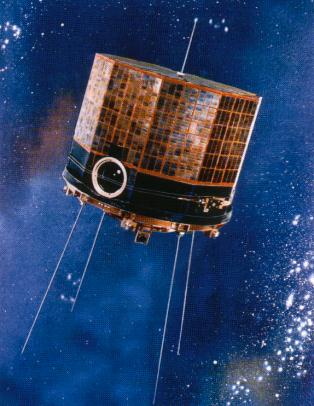
P-35-1 / DAPP 1
| Spacecraft: |
FTV 3501 / DMSP Block (1)
Data Acquisition and Processing Program |
| Chronologies: |
1962 payload #28 ; 1962 9th loss ; 187th
spacecraft. |
| Type: |
Meteorology |
| Sponsor: |
U.S. Air Force |
|
Source : A,
Parsch
|
|
.
Mercury 7 (MA-7 / Mercury-Atlas
7)
| Spacecraft: |
Spacecraft No. 18 / Aurora 7 |
| Chronologies: |
1962 payload #29 ; 1962-019A ; 188th spacecraft. |
| Type: |
Piloted spaceship |
| Sponsor: |
NASA |
|
|
| Launch: |
24 May 1962 at 12h45 UTC, from
Cape Canaveral's LC-14, by an Atlas D (107D). |
| Orbit: |
|
| Decayed: |
|
| Mission: |
Mercury-Atlas 7 (MA-7) flight – Mecury capsule
Aurora 7 with astronaut M. Scott Carpenter as pilot - the second
U.S. manned orbital flight and the fourth U.S. manned space flight. Astronaut
Carpenter performed series of space science and technical development experiments
including visual and photographic observations of star fields and white
particles, consumption of solid foods, release of tethered multi-colored
balloon to test sighting, and observation of separated Atlas booster.
The 130,650 km flight featured attitude stabilization and control pilotage
for completion of three orbits, and monitoring of control-systemsfuel for
proper retroh attitude. The caused landing impact point over 320
km beyond intended area and beyond radio range of recovery forces. After
landing, Carpenter egressed through top of capsule and climbed on inflated
raft awaiting rescue. After three hours on water, he was picked up by a
helicopter from U.S.S.Intrepid, and his capsule was retrieved by
the destroyer Pierce. Carpenter was reported in good physical condition |
| Source: |
Jonathan
McDowell's
Master
List ; Mark
Wade’s Encyclopedia Astronautica ; National
Space Science Data Center's 1962-019A
; TRW Space Log ; Astronautical And Aeronautical Events of 1962,
p. 85-6. |
|
|
.
Kosmos 5
| Spacecraft: |
2MS No. 2 |
| Chronologies: |
1962 payload #30 ; 1962-020A ; 189th spacecraft. |
| Type: |
Radiation studies |
| Sponsor: |
Soviet Union |
|
|
|
.
Discoverer 42 / CORONA
9035 / KH-4
| Spacecraft: |
FTV 1128 |
| Chronologies: |
1962 payload #31 ; 1962-021A ; 190th spacecraft. |
| Type: |
Reconnaissance |
| Sponsor: |
U.S. National Reconnaissance Office |
|
|
|
.
Kosmos
| Spacecraft: |
Zenit-2 No. 3 |
| Chronologies: |
1962 payload #32 ; 1962 10th loss ; 191st
spacecraft. |
| Type: |
Reconnaissance |
| Sponsor: |
Soviet Union's Defense ministry |
|
|
|
.
Discoverer 43 / CORONA
9036 / KH-4
| Spacecraft: |
FTV 1127 |
| Chronologies: |
1962 payload #33 ; 1962-022A ; 192nd spacecraft. |
| Type: |
Reconnaissance |
| Sponsor: |
U.S. National Reconnaissance Office |
|
|
|
.
OSCAR II
| Spacecraft: |
Orbiting Satellites Carrying
Amateur Radio |
| Chronologies: |
1962 payload #34 ; 1962-022B ; 193rd spacecraft. |
| Type: |
Communications (radio-amateur) |
| Sponsor: |
American Radio Relay League |
|
|
| Launch: |
2 June 1962 at 0h31 UTC, from
Vandenberg Air Force Base's LC-75-3-4, by a Thor-Agena B (Thor 335 / Agena
B 1127). |
| Orbit: |
206 kmx 384 km x 74.2° x 89.8 min |
| Decayed: |
21 June 1962. |
| Mission: |
OSCAR II, the 4.5-kg second phase I
satellite, was launched piggyback with a United States Air Force satellite.
June 2: USAF announced that OSCAR II was launched secretely as piggyback
on an unidentified USAF satellite. Unlike OSCAR I, advance notice was not
given the Project Oscar Association on the launching of OSCAR II. It broadcasts
“Hi” in Morse code on 144.993 megacycles for use by amateur radio operators.
It was very similar to OSCAR I.
Differences included (1) changing the surface thermal coatings to achieve
a cooler internal spacecraft environment, (2) modifying the sensing system
so the satellite temperature could be measured accurately as the batteries
decayed, and (3) lowering the transmitter power output to 100 mW to extend
the life of the onboard battery. OSCAR II lasted 18 days ceasing operation
on 20 June 20 1962. OSCAR II re-entered Earth’s atmosphere and disintegrated
on 19 June 1962, after 295 orbits.
On 22 March 1963,
NASA announced that Relay I had achieved all of its experiments and missions.
Performance of the spacecraft “has been uniformly excellent” throughout
abut 500 communications tests and demonstratiation in 660 orbit December
13-March 11. Although all planned demonstrations were completed,
they would be continued while the satellite remained in operation.
On 29 July 1963,
RCA announced Relay I had operated succesfull for 203 days, setting record
for performance and durabilityy for a communications satellite. RCA, which
built satdite for NASA, said Relay I had traveled estimated 250 million
kilometres and carried out more than 1,350 communications experiments and
demonstrations. |
| Source: |
Jonathan
McDowell's
Master
List ; Jonathan
McDowell's Master
List ; Mark
Wade’s Encyclopedia Astronautica ; National
Space Science Data Center's 1962-022B
; NASA, Aeronautical
and Astronautical Events of 1962, p. 93, 106 ; Aeronautical
and Astronautical Events of 1963, p. 103-4, 288 ; |
|
|
..
Samos 8 / PVP 852
| Spacecraft: |
Program 201 (BJ) ; FTV 2402 /
AFP-201 PVP 852 |
| Chronologies: |
1962 payload #35 ; 1962-023A ; 194th spacecraft. |
| Type: |
Reconnaissance |
| Sponsor: |
U.S. National Reconnaissance Office |
|
|
| Launch: |
17 June 1962 at 18h14 UTC, from
Vandenberg Air Force Base's LC-1-1, by a Atlas-Agena B (Atlas LV-3A 115D
/ Agena B SPS 2402). |
| Orbit: |
|
| Recovered: |
18 June 1962 |
| Mission: |
PVP 852/FTV 2402 (Program 698BJ Vehicle 2)
was launched from Point Arguello into polar orbit. All systems on the spacecraft
were reported to work normally through orbit 10. However, a gas leak depleted
attitude control fuel, and an early recovery was attempted. The satellite
was deorbited after one day; an electrical failure meant the SRV did not
separate from the Agena, and the two reentered 1000 km north of the planned
area. Deorbit was either rev 16 at around 1740 or rev 17 at around 1900. |
| Source: |
Jonathan
McDowell's
Master
List ; Mark
Wade’s Encyclopedia Astronautica ; National
Space Science Data Center's 1962-023A
; TRW Space Log ; Jonathan
McDowell's USAF
imaging programs' 9.3.1:
SAMOS & FTV
2402 ; |
|
|
.
Ferret 2
| Spacecraft: |
Program 102 (BK) ; FTV 2312 |
| Chronologies: |
1962 payload #36 ; 1962-024A ; 195th spacecraft. |
| Type: |
Electronic intelligence |
| Sponsor: |
U.S. Air Force |
|
|
|
.
Tiros 5
| Spacecraft: |
Tiros E (A-50) |
| Chronologies: |
1962 payload #37 ; 1962-025A ; 196th spacecraft. |
| Type: |
Meteorology |
| Sponsor: |
NASA |
|
|
| Launch: |
19 June 1962 at 12h19 UTC, from
Cape Canaveral's LC-17A, by a Delta DM-19 (Thor Delta 321 / Delta 10). |
| Orbit: |
|
| Decayed: |
590 km z 972 km x 100.5 min. |
| Mission: |
The faulty guidance system of the Thor-Delta
booster placed TIROS 5 into elliptical orbit, instead of a 644-km circular
orbit. Cloud-cover pictures transmitted to tracking station at Wallops
Station on early orbits were of excellent quality. TIROS 5 is expected
to chart the origin, formation, and movement of hurricanes, typhoons, and
0ther storms during the August-September peak tropical storm penod.
TIROS 5 stopped transmitting pictures from the Tegea-lens, medium-angle
camera on 9 July 1962. The camera system transmitted 4,701 pictures of
which 70% were considered excellent quality. The wide-angle Elgeet-lens
camera, which is still functioning, had transmitted 5,100 pictures to date,
some of which aided in the analysis of Typhoon Joan over the Western Pacitic.
On 5 May 1963, TIROS
V ceased transmitting photographs after record 10½ months of operation.
Through orbit 4,579 on May 4, it had sent more than 57,857 cloud-cover
pictures, 80% of which were usable for meteorological purposes. |
| Source: |
Jonathan
McDowell's
Master
List ; Mark
Wade’s Encyclopedia Astronautica ; National
Space Science Data Center's 1962-025A
; Aeronautical
and Astronautical Events of 1962, p. 105, 116 ; Aeronautical
and Astronautical Events of 1963, p. 179 ; |
|
|
.
Discoverer 44 / CORONA
9037 / KH-4
| Spacecraft: |
FTV 1129 |
| Chronologies: |
1962 payload #38 ; 1962-026A ; 197th spacecraft. |
| Type: |
Reconnaissance |
| Sponsor: |
U.S. National Reconnaissance Office |
|
|
|
.
Discoverer 45 / CORONA
9038 / KH-4
| Spacecraft: |
FTV 1151 |
| Chronologies: |
1962 payload #39 ; 1962-027A ; 198th spacecraft. |
| Type: |
Reconnaissance |
| Sponsor: |
U.S. National Reconnaissance Office |
|
|
|
.
Kosmos 6
| Spacecraft: |
DS-P1 No. 1 |
| Chronologies: |
1962 payload #40 ; 1962-028A ; 199th spacecraft. |
| Type: |
Antimissile technologies |
| Sponsor: |
Soviet Union's Defense ministry |
|
|
|
.
Telstar 1
| Spacecraft: |
|
| Chronologies: |
1962 payload #41 ; 1962-029A ; 200th spacecraft. |
| Type: |
Communications |
| Sponsor: |
ATT |
|
|
| Launch: |
10 July 1962 8h35 GMT UTC, from
Cape Canaveral's LC-17B, by a Delta DM-19 (Thor Delta 316 / Delta 11). |
| Orbit: |
|
| Decayed: |
|
| Mission: |
TELSTAR 1 experimental communications satellite
is the first privately financed satellite. It was funded by the American
Telephone and Telegraph Co. (AT&T) under a NASA-AT&T agreement
of 27 July 1961. Bell Telephone Laboratories design and build satellites
at own expense; AT&T reimburse NASA for Delta launch vehicles, launch,
and tracking services (approximately $3 million per launch). Bell System
conduct the communications experiments and NASA provide telemetry; and
both NASA and AT&T analyze data and results, to be made available by
NASA to the world scientific community. First commercial transmission
of live TV via satellite and first transatlantic TV transmission occurred
on 10 July 1962, when pictures of waving American flag were telecast from
AT&T center near Andover, Me., to TELSTAR, then received and placed
on all three major TV networks in the U.S. TV signals also were relayed
from Andover to TELSTAR and then relayed to French antenna at Pleumeur-Bodou
on the Brittany peninsula and the British station at Goonhilly, Cornwall. |
| Launch: |
Launching of TELSTAR marked tenth straight
successful flight of the 3-stage Delta rocket. The history of Delta goes
back to the Thor-Able and the earlier Vanguard, from which it acquired
its upper stages. Originally designed as an interim booster when NASA ordered
twelve Deltas from Douglas Aircraft in April 1959, it achieved what NASA
Administrator Webb called “the greatest level of reliability of any of
our launch vehicles.” First east-to-west transatlantic TV transmission
occured on 10 July: French station at Pleumeur-Bodou reflecting eight-minute
telecast off TELSTAR satellite in 15th orbit to AT&T facility at Andover,
Me. First transatlantic telephone conversation via TELSTAR satellite
occurred officially on 13 July, when AT&T President Eugene McNeely
spoke to Jacques Marette, French Communications Minister. On next orbit,
McNeely spoke with Sir Ronald German, director-general of the British Post
Office. (Technicians had unofficially talked on transatlantic circuit via
TELSTAR the day before, 12 July.) On 19 July, newsmen in London and New
York exchanged news items and conversations in the first two-way transatlantic
telephone connection via TELSTAR. Reuters transmitted its first news report
to the world press via satellite. On 23 July,: TELSTAR relayed two
20-minute live TV shows, the first formal exchange of programs across the
Atlantic. The first US. program to the Eurovision network of stations in
18 nations included sequences on the Statue of Liberty, a major league
baseball game in Chicago, President Kennedy’s news conference, Astronaut
Walter M. Schirra from Cape Canaveral, and the Mormon Tabernacle Choir
from Mt. Rushmore. Three hours later on another orbit, the Eurovision program
was beamed to the U.S. where it was carried by all three networks. It included
scenesof Big Ben in London, the Colosseum in Rome, the Champs Elys6es in
Paris, reindeer in the Arctic Circle region of Sweden, Sicilian fishermen
tending their nets, and a scene in the Sistine Chapel of Vatican.
Telstar I developed malfunctions in power sources on 29 November 1962.
On 4 January 1963,
Telstar I transmitted 10-min. television pictures across the Atlantic,
the satellite’s first trans-atlantic transmission since 23 November 1962
when radiation damaged onboard circuits.
Saturday Review
called Telstar “more than a triumph of the modern technology of space communications.
It was also n symbol wise men could approve, of a new era in human communications,
a work of peace that sought only to bring men together, not to destroy
them. Finally, it was the product of a promising new teamwork in space
between government and industry, in this case the largest private enterprise
venture in the world…” (Sat. Review,
FCC Chairman Newton
Minow said: “The year 1450 in Mainz, Germany, marked a watershed in history:
the introduction of the printing press and with it the begmnmg of modern
communication. … In these terms, we are still at the beginning of television:
the year 1465, so to speak. Even Telstar, with its present technological
sophistication, is but a crude vision of what will soon be the everyday,
global marriage of sight and sound. I believe television is now having
an impact on society as great as, if not greater than. the printing press
had over the course of several centuries…”
ON 28 February 1963,
Bell Telephone Laboratories announced Telstar I disconnected its storage
batteries and stopped communicating, apparently after misinterpreting a
ground command. As in previous communications blackout in November, shutoff
occurred as Telstar’s changing orbit brought it into strong sections of
radiation belt. This pattern led Bell engineers to “suspect that the continued
inhibiting effects of radiation on transistors” is to blame, according
to Bell spokesman Bruce Stasser. |
| Source: |
Jonathan
McDowell's
Master
List ; Mark
Wade’s Encyclopedia Astronautica ; National
Space Science Data Center's 1962-029A
; NASA, Aeronautical
and Astronautical Events of 1962, p. 117-8, 119, 121, 126, 128,
280 ; Aeronautical
and Astronautical Events of 1963, p. 4, 10; Aeronautical
and Astronautical Events of 1963, p. 22-3, 71 ; |
F |
|
.
Samos 9 / PVP 853
| Spacecraft: |
Program 201 (BJ) ; FTV 2403 /
AFP-201 PVP 853 |
| Chronologies: |
1962 payload #42 ; 1962-030A ; 201st spacecraft. |
| Type: |
Reconnaissance |
| Sponsor: |
U.S. National Reconnaissance Office |
|
|
| Launch: |
18 July 1962 at 0h51 UTC, from
Vandenberg Air Force Base's LC-1-1, by an Atlas-Agena B (Atlas LV-3A 120D
/ Agena B FTV 2403). |
| Orbit: |
|
| Reentered: |
27 July 1962 |
| Mission: |
FTV 2403 (Program 698BJ Vehicle 3, with payload
PVP 853) was launched from Point Arguello. The Agena secondary
propulsion system (SPS) failed to operate
due to an electrical short. The planned orbit was 213 x 256 km, and FTV
2403 achieved 217 x 227 km. The satellite operated for at least 18 orbits.
The retrofire appears
to have failed, but the SRV separated anyway and was left in a similar
184 x 234 km orbit. The Agena reentered after 7 days, on July 25, and the
SRV reentered on July 27 The spacecraft carried a neutron albedo experiment
in addition to the USAF intelligence payload.
Capsule failed to deorbit. |
| Source: |
Jonathan
McDowell's
Master
List ; Mark
Wade’s Encyclopedia Astronautica ; National
Space Science Data Center's 1962-030A
; TRW Space Log ; Jonathan
McDowell's
USAF
imaging programs' 9.3.1:
SAMOS & FTV
2403 ; |
|
|
.
Discoverer 46 / CORONA
9039 / KH-4
| Spacecraft: |
FTV 1130 |
| Chronologies: |
1962 payload #43 ; 1962-031A ; 202nd spacecraft. |
| Type: |
Reconnaissance |
| Sponsor: |
U.S. National Reconnaissance Office |
|
|
|
.
Mariner 1
| Spacecraft: |
Mariner R-1 |
| Chronologies: |
1962 payload #44 ; 1962 11th loss ; 203rd
spacecraft. |
| Type: |
Venus probe |
| Sponsor: |
NASA |
|
|
| Launch: |
22 July 1962 at 9h21 UTC, from
Cape Canaveral's LC-12, by an Atlas-Agena B (Atlas LV-3A 145D / Agena B
6901). |
| Orbit: |
|
| Decayed: |
|
| Mission: |
|
| Notes: |
The Atlas-Agena B, deviating from course
at 312 seconas, was commanded to be destroyed by the range safety officer
of 290 seconds and nearly 160 km high. The Mariner R-1 Venus probe had
been planned to reach the vicinity of Venus about 8 December 1962 and to
pierce the dense cloud layers hiding the surface of Venus from observation.
Work immediately began to launch another Mariner spacecraft before the
end of the 50-day Venus window on 10 September 1962, hopefully within several
weeks if difficulty with the Atlas could be ascertained.
Two separate faults
had interacted fatally to destroyed Mariner 1. The guidance antenna on
the Atlas performed poorly, below specifications. When the signal received
by the rocket became weak and noisy, the rocket lost its lock on the ground
guidance signal that supplied steering commands. The possibility had been
foreseen; in the event that radio guidance was lost the internal guidance
computer was supposed to reject the spurious signals from the faulty antenna
and proceed on its stored program, which would probably have resulted in
a successful launch. However, at this point a second fault took effect.
Somehow a hyphen had been dropped from the guidance program loaded aboard
the computer, allowing the flawed signals to command the rocket to veer
left and nose down. The hyphen had been missing on previous successful
flights of the Atlas, but that portion of the equation had not been needed
since there was no radio guidance failure. Suffice it to say, the first
U.S. attempt at interplanetary flight failed for want of a hyphen.. Post
Flight Review Board determined that the omission of a hyphen in
coded computer instructions transmitted incorrect guidance signals to Mariner
spacecraft. Omission of hyphen in data editing caused computer to swing
automatically into a series of unnecessary course correction signals which
threw spacecraft off course so that it had to be destroyed. |
| Source: |
Jonathan
McDowell's
Master
List ; Mark
Wade’s Encyclopedia Astronautica ; National
Space Science Data Center's MARIN1
; Far Travelers: The Exploring
Machines (NASA SP-480)'s Chapter
1 ; NASA, Aeronautical
and Astronautical Events of 1962, p. 128, 131 ; |
|
|
..
Discoverer 47 / CORONA
9040 / KH-4
| Spacecraft: |
FTV 1131 |
| Chronologies: |
1962 payload #45 ; 1962-032A ; 204th spacecraft. |
| Type: |
Reconnaissance |
| Sponsor: |
U.S. National Reconnaissance Office |
|
|
|
.
Kosmos 7
| Spacecraft: |
Zenit-2 No. 4 |
| Chronologies: |
1962 payload #46 ; 1962-033A ; 205th spacecraft. |
| Type: |
Reconnaissance |
| Sponsor: |
Soviet Union's Defense ministry |
|
|
|
.
Discoverer 48 / CORONA
9041 / KH-4
| Spacecraft: |
FTV 1152 |
| Chronologies: |
1962 payload #47 ; 1962-034A ; 206th spacecraft. |
| Type: |
Reconnaissance |
| Sponsor: |
U.S. National Reconnaissance Office |
|
|
|
.
Samos 10 / PVP 854
| Spacecraft: |
Program 201 (BJ) ; FTV 2404 /
AFP-201 PVP 854 |
| Chronologies: |
1962 payload #48 ; 1962-035A ; 207th spacecraft. |
| Type: |
Reconnaissance |
| Sponsor: |
U.S. National Reconnaissance Office |
|
|
|
.
Vostok 3
| Spacecraft: |
Vostok-3A No. 5 |
| Chronologies: |
1962 payload #49 ; 1962-036A ; 208th spacecraft. |
| Type: |
Pilote spacecraft |
| Sponsor: |
Soviet Union (Korolev's Design Bureau) |
|
|
| Launch: |
11 August 1962 at 8h30 UTC, from
Baykonur Cosmodrome's LC-1, by an A-1/"Vostok" (8K72K). |
| Orbit: |
180.7 km. x 234.6 km x 88.33 min |
| Decayed: |
|
| Mission: |
Soviet report that
Cosmonauts Nikolayev and Popovich lost an abnormal amount of calcium during
their extended tandem space flights. Dr. Stanley C. White, of NASA Manned
Spacecraft Center, said same abnormal increase of calcium in body waste
occurs in bedridden patients after 10 or 12 days; in Soviet cosmonauts,
condition occurred “earlier than either we or the Russians would have thought:
that is, about two or three times earlier.”
On 15 May 1964,
Soviet physiologist Prof. Vasily V. Parin revealed that cosmonauts Andrian
Nikolayev and Pavel Popovich had orthostatic hypotension following their
space flights. The condition was noted in the cosmonaut “even two days
after the flight.” The Soviet Director of Institute of Normal and Pathological
Physiology, Soviet Academy of Medical Sciences, said that the cosmonauts
“showed no disturbances in their state of health” after their prolonged
space flights, and the “transient functional reactions” were said to have
“disappeared in seven or 10 days.…” He added that “post-flight disturbances
were largely related to the central nervous system, the cardiovascular
systems and metabolism.”
Prof. Nello Pace,
head of Physiology Dept. at Univ. of California (Berkeley), closely questioned
Prof. Parin about his statements. Prof. Pace considered that hypotension
was “among the most significant facts” disclosed at the conference. He
noted that the condition had been observed in U.S. Astronauts Schirra and
Cooper, and that NASA had said that implications of blood pressure responses
“will have to be given very serious consideration as larger missions are
undertaken.” |
| Source: |
Jonathan
McDowell's
Master
List ; Mark
Wade’s Encyclopedia Astronautica ; National
Space Science Data Center's 1962-036A
; TRW Space Log ; Aeronautical
and Astronautical Events of 1963, p. 45-6, 363 ; Astronautics
and Aeronautics 1964, p. 177-8 ; |
|
|
.
Vostok 4
| Spacecraft: |
Vostok-3A No. 6 |
| Chronologies: |
1962 payload #50 ; 1962-037A ; 209th spacecraft. |
| Type: |
Piloted spaceship |
| Sponsor: |
Soviet Union (Korolev's Design Bureau) |
|
|
|
.
Kosmos 8
| Spacecraft: |
DS-K-8 No. 1 |
| Chronologies: |
1962 payload #51 ; 1962-038A ; 210th spacecraft. |
| Type: |
Micrometeroid studies (civil) |
| Sponsor: |
Soviet Union's Defense ministry |
|
|
|
.
P-35-2 / DAPP 2
| Spacecraft: |
FTV 3502 / DMSP
Block (2)
Data Acquisition and Processing Program |
| Chronologies: |
1962 payload #52 ; 1962-039A ; 211th spacecraft. |
| Type: |
Meteorology |
| Sponsor: |
U.S. Air Force |
|
Source : A,
Parsch |
|
.
Venera
| Spacecraft: |
2MV-1 No. 1 |
| Chronologies: |
1962 payload #53 ; 1962-040A ; 212th spacecraft. |
| Type: |
Venus probe |
| Sponsor: |
Soviet Union (Korolev's Design Bureau) |
|
|
|
.
Mariner 2 (Mariner II)
| Spacecraft: |
Mariner R-2 |
| Chronologies: |
1962 payload #54 ; 1962-041A ; 213th spacecraft. |
| Type: |
Venus probe |
| Sponsor: |
NASA |
|
 Source: nASA.
|
| Launch: |
27 August 1962 at 6h53 UTC, from
Cape Canaveral's LC-12, by an Atlas-Agena B (Atlas LV-3A 179D / Agena B
6902). |
| Orbit: |
Solar orbit : 105 400 00 km x 183 100 000
km |
| Decayed: |
n/a |
| Mission: |
On December 14, 1962, Mariner II passed within
34,750 km of planet Venus and made 42-min. instrument-scan of Venutian
atmosphere and surface before continuing into perpetual orbit of the Sun.
In world’s first close interplanetary contact, Mariner II measured and
returned temperatures and other characteristics of Venutian surface and
its atmosphere.
The planetayr probe orbits the Sun every 345.9 days, It would make its
closest approach to the Sun on December 28, 1962 at distance of 105,399,050
km, and would be farthest from Sun on June 19, 1963, at 183,125,257 km.
Mariner II’s closest approach to Earth would come September 27, 1963, when
it would be 41,457,039 km away. Two days after Venus encounter, all systems
aboard the spacecraft were functioning normally.
On 4 January 1963,
Mariner II ceased transmitting scientific data to Earth. The spacecraft
was 9.2 million km beyond planet Venus and 87.4 mkm from Earth. This was
new communications record, previous record having been set by Pioneer V.
NASA considered
that Mariner Ihad been so successful that repeat flight scheduled for 1964
had been canceled. Interplanetary efforts would be concentrated instead
on such projects as sending probe toward Mars in 1964 and later flight
to Venus with advanced Mariner probe in 1965.
Preliminary science
results from Mariner II mission estimate Venutian surface temperature was
around 400° C. Temperatures are essentially same on dark and sun-lighted
sides of Venus, with a cold spot in southern hemisphere. Radar observation
on Venus from Goldstone Tracking Station established Venus' rotation rate
as 230 days, ±40-50 days, and retrograde. Venus seems to have very
low, if any, magnetic field. Also, scientists were able to calculate the
mass of Venus with probable error of 0.005% (ten times better than previously
estimated), calculated to within 100 meters the value of Astronomical Unit,
established by radar observations as 149,566,558 km - 80,000 km longer
than established by classical astronomical observations, and to determine
precisely the mass of the Moon, now known to certainty of 0.1%.
On 1 August 1963,
Mariner II completed its first orbit of the Sun, after traveling approximately
870 million km (aphelion occurred on 18 June 1963 and perihelion on 28
December 1962). The spacecraft passed within 34,832 km of Venus and provided
111 million bits of information on the planet and interplanetary space. |
| Notes: |
Total cost of Mariner 1 and 2, the second
of which brought U.S. several firsts in knowledge of planet Venus, was
$47 million. |
| Source: |
Jonathan
McDowell's
Master
List ; Mark
Wade’s Encyclopedia Astronautica ; National
Space Science Data Center's 1962-041A
; TRW Space Log ; Aeronautics
and Astronautics, 1962, p. 268 & 278 ;Aeronautical
and Astronautical Events of 1963, p. 4, 8, 69-70, 96, 290 ; |
|
|
..
Discoverer 49 / CORONA
9044 / KH-4
| Spacecraft: |
FTV 1153 |
| Chronologies: |
1962 payload #55 ; 1962-042A ; 214th spacecraft. |
| Type: |
Reconnaissance |
| Sponsor: |
U.S. National Reconnaissance Office |
|
|
|
.
Venera
| Spacecraft: |
2MV-1 No. 2 SA |
| Chronologies: |
1962 payload #56 ; 1962-043A ; 215th spacecraft. |
| Type: |
Venus probe |
| Sponsor: |
Soviet Union (Korolev's Design Bureau) |
|
|
|
.
Discoverer 50 / CORONA
9042A (ARGON) / KH-5
| Spacecraft: |
FTV 1132 |
| Chronologies: |
1962 payload #57 ; 1962-044A ; 216th spacecraft. |
| Type: |
Reconnaissance |
| Sponsor: |
U.S. National Reconnaissance Office |
|
|
|
.
Venera
| Spacecraft: |
2MV-2 |
| Chronologies: |
1962 payload #58 ; 1962-045A ; 217th spacecraft. |
| Type: |
Venus probe |
| Sponsor: |
Soviet Union (Korolev's Design Bureau) |
|
|
|
.
Discoverer 51 / CORONA
9043 / KH-4
| Spacecraft: |
FTV 1133 |
| Chronologies: |
1962 payload #59 ; 1962-046A ; 218th spacecraft. |
| Type: |
Reconnaissance |
| Sponsor: |
U.S. National Reconnaissance Office |
|
|
|
.
ERS 2 / TRS 1
| Spacecraft: |
Environmental Research Subsatellite |
| Chronologies: |
1962 payload #60 ; 1962-046A ; 219th spacecraft. |
| Type: |
Earth sciences |
| Sponsor: |
U.S. Air Force |
|
|
|
.
Tiros 6
| Spacecraft: |
Tiros F2 / A-51 |
| Chronologies: |
1962 payload #61 ; 1962-047A ; 220th spacecraft. |
| Type: |
Meteorology |
| Sponsor: |
NASA |
|
|
| Launch: |
18 September 1962 at 8h53 UTC,
from Cape Canaveral's LC-17A, by a Delta DM-19 (Thor Delta 318 / Delta
12). |
| Orbit: |
|
| Decayed: |
|
| Mission: |
On 5 August 1963,
TIROS VI, still orbiting the Earth and still providing excellent quality
photographs, exceeded durability record of 302 days set by its predecmr
TIROS V. The spacecraft provided 58,589 pictures (several hundred more
than TIROS V), of which about 90 per cent were usable. It now continued
to operate in conjunction with TIROS
VII.
On 18 September
1963), TIROS VI marked a year-long operational life-time, setting new record
for weather satellites. On 31 July, it discovered first hurricane (Arlene)
of 1963 season in tropical Atlantic; altogether, it photographed two hurricanes
in Atlantic, two tropical storms in eastern Pacific, eight typhoons in
central and western Pacific, as well as sand storms in Saudi Arabia and
ice conditions in southern and northern hemispheres. Along with TIROS
V, it supported Mercury space flights of Astronauts Schirra and Cooper.
National Weather Satellite Center issued about 600 weather advisories around
the world based on some of the 63,000 cloud-cover pictures from TIROS VI.
On 17 October 1963,
NASA announced that TIROS VI was no longer sending usable cloud-cover pictures,
after 13 months of successful operation and some 67,000 pictures. |
| Source: |
Jonathan
McDowell's
Master
List ; Mark
Wade’s Encyclopedia Astronautica ; National
Space Science Data Center's 1962-047A
; TRW Space Log ; Astronautical
Events of 1963, p. 298, 345, 395 ; |
|
|
.
Kosmos 9
| Spacecraft: |
Zenit-2 No. 7 |
| Chronologies: |
1962 payload #62 ; 1962-048A ; 221st spacecraft. |
| Type: |
Reconnaissance |
| Sponsor: |
Soviet Union's Defense ministry |
|
|
|
.
Alouette 1
| Spacecraft: |
|
| Chronologies: |
1962 payload #63 ; 1962-049A ; 222nd spacecraft. |
| Type: |
Earth upper atmosphere studies |
| Sponsor: |
Canada |
|
|
| Launch: |
29 September 1962 at 6h05 UTC,
from Vandenberg Air Force Base's LC-75-1-1, by a Thor-Agena B (Thor
341 / Agena B 6101 (TA1)). |
| Orbit: |
|
| Decayed: |
|
| Mission: |
Named for high-flying songbird of Canada,
Alouette was first satellite to be both designed and built by a nation
other than U.S. or U.S.S.R. Its launchmarks NASA’s first orbiting attempt
from Point Arguello and its first use of a Thor-Agena B launch vehicle.
Data from Alouette
showed that ionosphere is usually rough in high latitudes and smooth in
lower latitudes, and that electron temperature of ionosphere increases
with latitude. This evidence indicated Van Allen radiation belts, which
extend to lower altitudes at higher latitudes, possibly are secondary heat
source for ionosphere. Where ionospheric and radiation particles collide,
ionospheric temperatures rise and F layers of ionosphere become more spread
apart - causing radio waves to scatter.
On 19 May 1965,
NASA launched a two-part sounding rocket payIoad timed to occur while Alouette
was passing nearby. The payload measure electron densities and ion
composition to provide more accurate profiles of upper atmosphere electron
density. The payload separated as planned at about 275 km altitude
and reached peak altitude at 975 km. Alouette's instruments provided a
horizontal profile of ionospheric and ion densities and temperatures to
be correlated with findings of the mother-daughter experiment, which later
impacted in the Atlantic Ocean. |
| Notes: |
On 20 April 1959, NASA announced acceptance
of proposals by the Canadian Defense Research Telecommunication Establishment
for continuing joint rocket and satellite ionospheric experiments of non-military
nature. Negotiations have resulted of arrangements for a satellite project
for "top-side" sounding of the ionosphere. Thus far, ionosphere sounding
has been conducted from the ground; this would be the first instance of
sounding from above. Laboratories in the participating countries will develop
suitable instrumentation for the experiment by joint agreement. No exchange
of funds is planned. |
| Source: |
Jonathan
McDowell's
Master
List ; Mark
Wade’s Encyclopedia Astronautica ; National
Space Science Data Center's 1962-049A
; United States Aeronautics
and Space Activities, 2nd Annual Report to Congress, 1960, p. 15
; Aeronautics
and Astronautics, 1915-1960, p. 108 ; TRW Space Log ; Astronautical
And Aeronautical Events of 1962, p. 197-8 ; Aeronautical
and Astronautical Events of 1963, p. 92 ; Astronautics
and Aeronautics 1965, p. 240 ; |
|
|
.
TAVE
| Spacecraft: |
TAVE stands fo Thor-Agena Vibration
Experiment |
| Chronologies: |
1962 payload #64 ; 1962-049B ; 223rd spacecraft. |
| Type: |
Technology |
| Sponsor: |
NASA (Goddard Space Flight Center) |
|
|
| Launch: |
29 September 1962 at 6h05 UTC,
from Vandenberg Air Force Base's LC-75-1-1, by a Thor-Agena B (Thor
341 / Agena B 6101 (TA1)). |
| Orbit: |
|
| Decayed: |
|
| Mission: |
TAVE measured low-frequency vibrations to
Agena stage and spacecraft interfaces during Thor boost phase, it was reported.
iT provided data verifying the techniques used by Goddard and Lockheed
in predicting the launch vibration environment of the Thor-Agena B rocket.
Demonstration that these techniques were sound is most important in designing
future experiments and structures for the Thor Agena vehicles. Goddard
Space Flight Center had designed, built, tested, and shipped 90-kg Tave
in 20 days only.
According to Mark
Wade's Encyclopedia Astronautice, on 12 September 1962, "NASA announced
it would launch a special satellite before the end of the year 'to obtain
information on possible effects of radiation on future satellites and to
give the world's scientific community additional data on the artificial
environment created by the radiation belt.' The 100-pound satellite would
be launched from Cape Canaveral into an elliptical orbit ranging from about
170-mile perigee to 10,350-mile apogee. First 'mystery' satellite in history
of space exploration was launched, according to British magazine Flight
International. The magazine said the satellite orbited at a height
of 113 miles and reentered the earth's atmosphere 12 days later. The satellite
was listed as belonging to the U.S. Air Force, but spokesman said this
was a 'scientific guess based on our assessment of previous satellite launchings.'
Launching was not confirmed, and no official U.S. listing included such
a satellite." [Could it be the TAVE payload (on which no data existed?] |
| Source: |
Mark
Wade’s Encyclopedia Astronautica Sep
12, 1962 Entry ; ; Astronautical And Aeronautical Events of 1962,
p. 239. |
|
|
..
Discoverer 52 / CORONA
9045 / KH-4
| Spacecraft: |
FTV 1154 |
| Chronologies: |
1962 payload #65 ; 1962-050A ; 224th spacecraft. |
| Type: |
Reconnaissance |
| Sponsor: |
U.S. National Reconnaissance Office |
|
|
|
.
Explorer 14 / EPE B
/ Explorer XIV
| Spacecraft: |
S-3A |
| Chronologies: |
1962 payload #66 ; 1962-051A ; 2254th spacecraft. |
| Type: |
Sun studies |
| Sponsor: |
NASA |
|
|
| Launch: |
2 October 1962 at 22h11 UTC,
from Cape Canaveral's LC-17B, by a Delta DM-3A (Thor Delta A 345
/ Delta 13). |
| Orbit: |
Initial: 278 km x 98,950 km] x 36.1 hr.
Later: 2,060 km x 98,900 k x 37 hr |
| Decayed: |
|
| Mission: |
The 40-kg Explorer XIV mission is to study
natural and man-made radiation in space. The satellite had relaided excellent
quality preliminary data. But in January 1963, it developed radio transmission
difficulty, not repairable by remote control.
On 22 June 1963,
Explorer XIV was eclipsed by the Moon - a possible first in satellite history.
Satellite was some 70,000 km. from the Earth with apogee portion in the
Sun’s direction when a 19-min. shadow occurred between approximately 0151
and 0210 UT.
On 2 August 1963,
after 10 months of satisfactory operation in orbit, Explorer XIV scientific
satellite, with its six experiments to measure energetic particles and
magnetic fields in space, was still functioning. During the 10 months,
data acquisition stations received 6,003 hrs. of data from Explorer XIV,
of which more than 4,500 hrs. were digitized and 3,200 hrs. were sent to
the six experimenters.
On 8 October 1963,
Explorer XIV ceased useful transmission after almost 10 months of
successful operation. Scientists at GSFC said trouble began in August,
when the satellite’s transmitter failed to modulate -- translate instrument
signals into telemetry code -- properly. Intermittent modulation had occurred
since then, but little useful data had been received. The satellite signal
is still useful for position reference. While not all the data had
been analyzed, Dr. L. Cahill, Univ. of New Hampshire, said a number of
new insights had already emerged, among them being: Earth‘s magnetosphere,
as shown by mapping charged particles, flared away from the Earth in an
ogival-pointed arch-shape; confirmation that the vector magnetic field
changes gently from a dipole configuration to a radial field at increasing
distance on the night side of the Earth near the equatorial plane; and
further evidence probably supporting Explorer VI’s finding of a ring current
flow on the night side of the Earth. (NASA Release 63-223) |
| Source: |
Jonathan
McDowell's
Master
List ; Mark
Wade’s Encyclopedia Astronautica ; National
Space Science Data Center's 1962-051A
; TRW Space Log ; Aeronautics
and Astronautics, 1962, p. 207, 210 ; Aeronautics
and Astronautics, 1963, p. 7, 252, 296, 357, 381 ; |
|
|
|
|
.
Mercury 8 (MA-8 / Mercury-Atlas
8)
| Spacecraft: |
Spacecraft No. 16 / Sigma 7 |
| Chronologies: |
1962 payload #67 ; 1962-052A ; 226th spacecraft. |
| Type: |
Piloted spaceship |
| Sponsor: |
NASA |
|
|
| Launch: |
3 October 1962 at 13h15 UTC,
from Cape Canaveral's LC-14, by an Atlas D (113D). |
| Orbit: |
|
| Decayed: |
|
| Mission: |
Mercury-Atlas 8 (MA-8) flight - the Sigma
7 spacecraft with astronaut Walter M. Schirra, Jr., as pilot - traveled
257,000 km, nearly six orbits, returning to earth at predetermined point
in Pacific Ocean about 9 hrs., 14 min. after blastoff. Within 40 min. after
landing he and his spacecraft were safely aboard aircraft carrier U.S.S.
Kearsarge.
Highly successful
MA-8 flight proved the feasibility of (1) prolonged weightless flight in
space and (2) drifting in orbit without consumption of hydrogen-peroxide
attitude control fuel and without physically endangering the astronaut.
Schirra,who spent a total of 2½ hrs. in drifting flight, reported
there were no unusual attitude control problems during drifting. Various
other scientific experiments during the flight included astronaut’s sighting
of luminous particles in space, also reported by astronauts John H. Glenn
and M. Scott Carpenter; and photographing cloud formations with a special
hand camera. Sisma 7 was sighted by observers on Indian Ocean tracking
ship for five min. as the spacecraft made its third orbit more than 160
km high. The observers said it appearcd almost as bright as Venus. This
was the first reported visual sighting of a manned spacecraft during orbital
flight. Only technical difficulty of the entire operation was attaining
proper adjustment of Schirra’s spacesuit coolant supply and failure of
body temperature measurements in first orbit. However, desired suit temperatures
were achieved early in second orbit. |
| Source: |
Jonathan
McDowell's
Master
List ; Mark
Wade’s Encyclopedia Astronautica ; National
Space Science Data Center's 1962-052A
; TRW Space Log ; Astronautical And Aeronautical Events of 1962,
p. 208-9. |
|
|
.
Discoverer 53 / CORONA
9046A (ARGON) / KH-5
| Spacecraft: |
FTV 1134 |
| Chronologies: |
1962 payload #68 ; 1962-053A ; 227th spacecraft. |
| Type: |
Reconnaissance |
| Sponsor: |
U.S. National Reconnaissance Office |
|
|
|
.
Kosmos 10
| Spacecraft: |
Zenit-2 No. 5 |
| Chronologies: |
1962 payload #69 ; 1962-054A ; 228th spacecraft. |
| Type: |
Reconnaissance |
| Sponsor: |
Soviet Union's Defense ministry |
|
|
|
.
Ranger 5
| Spacecraft: |
|
| Chronologies: |
1962 payload #70 ; 1962-055A ; 229th spacecraft. |
| Type: |
Lunar probe |
| Sponsor: |
NASA |
|
|
|
.
Kosmos 11
| Spacecraft: |
DS-A1 No. 1 |
| Chronologies: |
1962 payload #71 ; 1962-056A ; 230th spacecraft. |
| Type: |
Military Earth upper atmosphere studies &
technologies |
| Sponsor: |
Soviet Union |
|
|
|
.
Mars
| Spacecraft: |
2MV-4 No. 1 |
| Chronologies: |
1962 payload #72 ; 1962-057A ; 231st spacecraft. |
| Type: |
Mars probe |
| Sponsor: |
Soviet Union (Korolev's Design Bureau) |
|
|
|
.
Kosmos
| Spacecraft: |
1MS |
| Chronologies: |
1962 payload #73 ; 1962 12th loss ; 232nd
spacecraft. |
| Type: |
Radiation studies |
| Sponsor: |
Soviet Union |
|
|
|
.
Starad 1
| Spacecraft: |
|
| Chronologies: |
1962 payload #74 ; 1962-058A ; 233rd spacecraft. |
| Type: |
Radiation studies |
| Sponsor: |
U.S. Air Force |
|
|
| Launch: |
26 October 1962 at 16h14 UTC,
from Vandenberg LC-75-1-2, by a Thor-Agena D (Thor 353 / Agena D 1401). |
| Orbit: |
|
| Decayed: |
|
| Mission: |
Announced as a USAF-launched “unnamed satellite.”
But, on 6 April 1962, it was revealed that this USAF unidentified satellite,
which was launched to study artificial radiation, had discovered evidence
that radiation from U.S. Starfish high-altitude nuclear test would last
up to 10 years. The previously unidentified satellite, called STARAD, was
built at DOD request when it became apparent artificial radiation might
be damaging orbiting satellites, carried nine different instruments for
measuring the artificial radiation. Project Director Dr. Ludwig Katz of
USAF Cambridge Research Laboratories, said the satellite found there had
been little decrease in artifical radiation’s intensity since the satellite
was launched. “The decay of the belt is so small that a lifetime of five
to ten years would not surprise me.” STARAD also detected increased radiation
from Soviet high-altitude nuclear explosions of 28 October and 1 November
1962. It transmitted until 18 Januaray 1963 when its batteries deteriorated. |
| Notes: |
On 18 July 1965, it was reported that the
man-made radiation belt of high-energy “Starfish” electrons formed from
a U.S. hydrogen bomb test over the Pacific Ocean in 1962 were estimated
to have a possible life of up to 20 [338] yrs., during which time electrons
in the belt would slowly decay to the energy level of ordinary electrons. |
| Source: |
Jonathan
McDowell's
Master
List ; Mark
Wade’s Encyclopedia Astronautica ; National
Space Science Data Center's 1962-058A
; TRW Space Log ;Astronautical
Events of 1962, p. 222 ; Astronautics
and Aeronautics 1965, p. 337 ; TRW Space Log ;
Astronautical Events of 1963, p. 130 ; |
|
|
..
Explorer 15
| Spacecraft: |
EPE C / NASA S-3C / SERB |
| Chronologies: |
1962 payload #75 ; 1962-059A ; 234th spacecraft. |
| Type: |
Radiations studies |
| Sponsor: |
NASA |
|
|
| Launch: |
27 October 1962 at 23h15 UTC,
from Cape Canaveral Air Force Base's LC-17B, by a Delta A (Thor Delta A
346 / Delta 14). |
| Orbit: |
|
| Decayed: |
|
| Mission: |
Explorer XV (S-3b) is a 43,5-kg energetic
particles satellite was launched to study artificial radiation belt created
by U.S. high-altitude nuclear explosion in July, Explorer XV carried experiments
on magnetic field, ion-electron, electron flux, and distribution in pitch
angle of electrons; transmitter; optical attitude sensor; and solar cells,
including solar-cell damage experiment. It is similar to Explorer XII and
Explorer XIV which successful1 measured energetic particles of natural
radiation belts. Unfortunately, the satelite was spinning on its axis about
10 times faster than the planned 10-rpm rate, a problem which may well
compromized secondary experiments but not the main experiments. Two experiments
designed to determine decay rate of artificially created radiation had
been adversely affected by satellite’s excessive spin rate. Launching marked
13th successful satellite-orbiting by NASA-developed Delta vehicle.
As of 6 March 1963,
Explorer XV had transmitted 2,067 hours of data, of which 1,266 hours had
been digitized and sant to the five experimenters. The radiation-investigation
satellite had not been operating satisfactorily since 27 January 1963 and
had completely stopped transmitting January 31. NASA scientists believed
the satellite’s attitude with relation to the Sun was such that the Sun
was illuminating only the edge of the solar paddles; in such a case, the
satellite should resume transmitting around April 1, when the solar paddles
come into more favorable attitude to the Sun. |
| Source: |
Jonathan
McDowell's
Master
List ; Mark
Wade’s Encyclopedia Astronautica ; National
Space Science Data Center's 1962-059A
; TRW Space Log ; Astronautical
And Aeronautical Events of 1962, p. 223 & 224 ; Aeronautical
and Astronautical Events of 1963, p. 83 ; |
|
|
.
ANNA 1B
| Spacecraft: |
ANNA stands for Army-Navy-NASA-Air
Force |
| Chronologies: |
1962 payload #76 ; 1962-060A ; 235th spacecraft. |
| Type: |
Geodesy |
| Sponsor: |
U.S. Navy |
|
|
| Launch: |
31 October 1962 at 8h08 UTC,
from Cape Canaveral's LC-17A, by a Thor Able-Star (Thor Ablestar 319 AB012). |
| Orbit: |
|
| Decayed: |
|
| Mission: |
ANNA IB is a 160-kg, [90-cm spherical geodetic
satellite, It used four high-intensity lights that would flash on and off;
by comparing simultaneous observations of the satellite from various points
on earth, scientists could measure earth’s size, shape, and surface features
with accuracy never before possible. ANNA was developed and launched by
military services, with Johns Hopkins Applied Physics Laboratory as prime
contractor; NASA cooperated in tracking and in dissemination of orbital
data to the international scientific community for worldwide use of the
man-made star for geodetic purposes.
On 15 August 1963,
Richard B. Kershner of Johns Hopkins University's Applied Physics Laboratory,
disclosed that ANNA I’s flashing beacons had resumed after more than two
months of blackout. He said: “We have no explanation for the lights
coming back on two weeks ago. We don’t like to believe in space gremlins,
but we’ve reached the mint where that’s as good an explanation as any.”
On 31 October 1964,
ANNA 1B,s second anniversary, Johns Hopkins Univ. Applied Physics Laboratory,
reported that the satellite was still flashing its beacon and relaying
radio signals to Earth upon command.
The Earth has four
vast bulges, roughly in the design of a pyramid, and four equally large
depressions, reported scientists from Johns Hopkins Univ. Applied Physics
Laboratory on 9 June 1965. “They are as big as the North American continent,”
said Dr. Robert R. Newton, Supervisor of Space Research and Analysis at
the Laboratory. Discoveries announced were credited to ANNA IB geodetic
satellite and a number of USN research satellites. By studying rises and
dips in their orbits, scientists were able to determine gravitational highs
and lows. One high point centers over Ireland in the northern hemisphere
and sprawls northward toward the pole. Another extends across the equator
from New Guinea northward toward Japan. Another is south of Africa centered
about half way to Antarctica, and the fourth is west of South America with
its apex off Peru. |
| Source: |
Jonathan
McDowell's
Master
List ; Mark
Wade’s Encyclopedia Astronautica ; National
Space Science Data Center's 1962-060A
; TRW Space Log ; Aeronautical
and Astronautical Events of 1963, p. 225-6, 209 ; Astronautics
and Aeronautics, 1964, p. 370 ; Astronautics
and Aeronautics 1965, p. 27304 ; |
|
|
.
Mars 1
| Spacecraft: |
2MV-4 No. 2 |
| Chronologies: |
1962 payload #77 ; 1962-061A ; 236th spacecraft. |
| Type: |
Mars probe |
| Sponsor: |
Soviet Union (Korolev's Design Bureau) |
|
|
| Launch: |
1st November 1962 at 16h14 UTC,
from Baykonur Cosmodrome's LC-1, by an A-2-e/"Molniya" (8K78 T103-16). |
| Orbit: |
|
| Decayed: |
|
| Mission: |
Mars I, a 994 kg space probe was launched
on seven-month flight to Mars. Launched with an ‘improved booster” into
parking orbit around the Earth, Mars I was hurled into escape trajectory
when vehicle engines re-ignited. Tass reported Mars I was flying as planned
on its course toward Mars. “All systems are functioning normally and orders
sent to the station [i.e., probe] are well received and obeyed.” Main tasks
of the probe were interplanetary exploration, establishment of interplanetary
space radio communications, photographing the Martian surface and relaying
the photographs back to Earth by radio. “Telemetric, measuring, and scientific
instrumentation will be automatically activated in conformity with the
flight program by radio commands from the earth,” Tass said.
Soviet scientists
lost contact with Mars I interplanetary probe on 22 March 1963, after nearly
five months of spaceflight, when it was about 106 000 000 km from Earth;
however, no mention was made of this fact by the Russians until May 16.
On 16 May 1963,
Tass reported Soviet scientists had lost contact with Mars I interplanetary
probe on March 21, when it was about 105 million kilometres from Earth.
Probe was continuing on its flight toward vicinity of Mars but telemetry
data indicated difficulty in orientation system had misaligned its radio
antennas. Tass said Mars I had recorded considerable change in boundaries
of radiation belts around Earth; “sphere of maximum intensity” in innermost
belt was farther out than previously noted. Intensity of cosmic rays had
almost doubled in last four years, Tass said. Important findings were made
concerning stability and energy of interplanetary and solar plasma, and
Mars I made possible first scientific observation of junction of Earth’s
ionized gas envelope with outermost belt of charged particles. Other data
on intensity of magnetic fields in space and distribution of meteoric particles
were recorded.”
On 19 June 1963,
Mars I passed planet Mars, but with its communications systems dead as
they had been since March 21. All subsequent attempts to restore communication
had failed. |
| Source: |
Jonathan
McDowell's
Master
List ; Mark
Wade’s Encyclopedia Astronautica ; National
Space Science Data Center's 1962-061A
; TRW Space Log ; Aeronautical
and Astronautical Events of 1962, p. 228 ; Aeronautical
and Astronautical Events of 1963, p. 102, 199, 248; |
|
|
.
Mars
| Spacecraft: |
2MV-3 No. 1 |
| Chronologies: |
1962 payload #78 ; 1962-062A ; 237th spacecraft. |
| Type: |
Mars probe |
| Sponsor: |
Soviet Union (Korolev's Design Bureau) |
|
|
|
.
Discoverer 54 / CORONA
9047 / KH-4
| Spacecraft: |
FTV 1136 |
| Chronologies: |
1962 payload #79 ; 1962-063A ; 238th spacecraft. |
| Type: |
Reconnaissance |
| Sponsor: |
U.S. National Reconnaissance Office |
|
|
|
.
Samos 11 / PVP 855
| Spacecraft: |
Program 201 (BJ) ; AFP-201 PVP
855 / FTV 2405 |
| Chronologies: |
1962 payload #80 ; 1962-064A ; 239th spacecraft. |
| Type: |
Reconnaissance |
| Sponsor: |
U.S. National Reconnaissance Office |
|
|
|
.
TRS 1 / ERS 1
| Spacecraft: |
TRS stands for Tetra-hedral Research
Satellite |
| Chronologies: |
1962 payload #81 ; 1962-064B ; 240th spacecraft. |
| Type: |
Earth sciences |
| Sponsor: |
U.S. Air Force |
|
|
| Launch: |
11 November 1962 at 20h17 UTC,
from Vandenberg Air Force Base's LC-1-1, by an Atlas-Agena B (Atlas LV-3A
128D / Agena B). |
| Orbit: |
|
| Decayed: |
|
| Mission: |
A TRS Mark I research subsatellite, ERS 1,
was attached to the Agena 2405 aft rack but failed to separate.
On 13 November 1962,
“USAF announced it had placed in orbit 0.67 kg Tetra-hedral Research Satellite
(TRS), launched piggyback aboard unidentified satellite using Thor-Agena
vehicle. TRS was orbited to map radiation in space and radio its findings
back to earth. NASA communications and telemetry stations were supporting
this USAF project.” |
| Source: |
Jonathan
McDowell's
Master
List ; Mark
Wade’s Encyclopedia Astronautica ; National
Space Science Data Center's 1962-064B
; TRW Space Log ; Jonathan
McDowell's USAF
imaging programs' FTV
2405 ; Astronautical And Aeronautical Events of 1962,
p. 239. |
|
|
Saturn 1 SA-3
| Satuan SA-3 |
On 16 Novembe 1962, Saturn SA-3
reached 167 km altitude in ballistic flight from Cape Canaveral, the fully-fueled
S-I stage performing as planned. Upper stages were fdled with water simulating
weight of live stages. At peak altitude, rocket was detonated by radio
command and the ballast water was released into the ionosphere, forming
massive cloud of ice particles several kilometer in diameter. From the
cloud experiment (Project Highwater II) scientists hoped to gain data on
atmospheric physics. This was third straight test-flight success of NASA’s
Saturn I and first flight with maximum fuel onboard. Vehicle generated
590 tons thrust on flight of 4min., 55 sec.
- Astronautical And Aeronautical Events
of 1962, p. 244 |
.
Discoverer 55 / CORONA
9048 / KH-4
| Spacecraft: |
FTV 1135 |
| Chronologies: |
1962 payload #82 ; 1962-065A ; 241st spacecraft. |
| Type: |
Reconnaisance |
| Sponsor: |
U.S. National Reconnaissance Office |
|
|
|
.
Discoverer 56 / CORONA
9049 / KH-4
| Spacecraft: |
FTV 1155 |
| Chronologies: |
1962 payload #83 ; 1962-066A ; 242nd spacecraft. |
| Type: |
Reconnaissance |
| Sponsor: |
U.S. National Reconnaissance Office |
|
|
|
.
SURCAL 2 / Black Sphere
| Spacecraft: |
NRL PL120 |
| Chronologies: |
1962 payload #84 ; 1962-067A ; 243rd spacecraft. |
| Type: |
Electronic intelligence |
| Sponsor: |
U.S. Air Force/U.S. Navy |
|
|
|
..
Injun 3
| Spacecraft: |
Injun 2B |
| Chronologies: |
1962 payload #85 ; 1962-067B ; 244th spacecraft. |
| Type: |
Radiation and geophysical studies |
| Sponsor: |
U.S. Air Force/U.S. Navy |
|
|
|
.
Surcal 2
| Spacecraft: |
NRL PL121 |
| Chronologies: |
1962 payload #86 ; 1962-067C ; 245th spacecraft. |
| Type: |
Electronic intelligence |
| Sponsor: |
U.S. Air Force/U.S. Navy |
|
|
|
.
Surcal 1B
| Spacecraft: |
NRL PL120 Black Sphere |
| Chronologies: |
1962 payload #87 ; 1962-067D ; 246th spacecraft. |
| Type: |
Electronic intelligence? |
| Sponsor: |
U.S. Air Force/U.S. Navy |
|
|
|
.
Calsphere 1
| Spacecraft: |
|
| Chronologies: |
1962 payload #88 ; 1962-067E ; 247th spacecraft. |
| Type: |
Electronic intelligence |
| Sponsor: |
U.S. Air Force/U.S. Navy |
|
|
|
.
Relay 1
| Spacecraft: |
Relay-A / NASA A-15 |
| Chronologies: |
1962 payload #89 ; 1962-068A ; 248th spacecraft. |
| Type: |
Communications |
| Sponsor: |
NASA Goddard Space Flight Center |
|
|
| Launch: |
13 December 1962 at 23h30 UTC,
from Cape Canaveral's LC-17A, by a Delta DM-3B (Thor Delta B 355 / Delta
15). |
| Orbit: |
|
| Decayed: |
|
| Mission: |
Built by RCA for NASA, RelayY was designed
to be first active repeater satellite linking three continents: North America,
South America, and Europe. Objectives of the project were to test intercontinental
microwave communications by low-altitude active repeater satelliites, measure
energy levels of space radiation in its orbital path, and determine extent
of radiation damage to solar cells and electronic com onents.
But at first, efforts
to turn on Relay’’s communications equipment (to NASA test station at Nutley,
N.J.) were unsuccessful, the satellite’s onboard battery power being too
low to operate the transponders. NASA said telemetry data indicated abnormal
drain upon the power supply was probable cause of low voltage; All communications
experiments were postponed indefitety.
Between 3 January
and 9 March 1963, Relay I had operated successfully in about 500 communications
experiments, including first voice, facsimile, and teletype links via satellite
between U.S. and South America.
In early July 1963,
with President Kennedy’s return to Washington from Europe, Relay I marked
end of its busiest programing period. Relay was “booked solid” during past
weeks to cover President’s trip, death of Pope John XXIII, and election
of Pope Paul VI. During its six months of operation, Relay I had been used
for 85 public communications demonstrations, including transmission of
television, voice, radio-photo, and teletype.
On 25 Novembrer
1963, following the assasination of President Kennedy, Relay I enabled
all of Europe, including the U.S.S.R., to view the funeral ceremonies.
The satellite also provided transmission across the Pacific to Japan, where
an estimated 95 million persons viewed the ceremonies. Throughout the four
days of stark events, the Nation and the world participated to a degree
never before possible by means of round-the-clock TV coverage that raised
that young medium to a new dimension for thoroughness, maturity, and sensitivity.
As of 3 January
1964, Relay 1 was still transmitting despite an onboard timer set to turn
it off after one year. Electrolytic solution was supposed to have eaten
through main power lead to switch off transmission power. NASA and RCA
experts speculated erosion was slowed because environmental temperatures
were cooler than anticipated. Launched into orbit Dec. 13,1962, RELAY I
has been used for 2,000 communications experiments with more than 290 hours
of transmission time, most of which was wideband transmission or TV. On
31 January 1964, Relay I communications satellite continued operating normally
and the one-year onboard timer had not cut off as of this date.
On 13 December 1964,
Relay I began its third year in orbit and could still send clear, high-resolution
television and audio signals across oceans and continents. The communications
satellite had circled the globe 5,685 times and accomplished 186 demonstrations
and 2,139 experiments, with a transponder-on time of 334 hours.
On 3 January 1965,
NASA reports that more than 50 million Europeans -- including viewers behind
the Iron Curtain -- had received same-day transmission of the Tokyo Olympic
Games via U.S. satellites Syncom
III and Relay I in October 1964. |
| Source: |
Jonathan
McDowell's
Master
List ; Mark
Wade’s Encyclopedia Astronautica ; National
Space Science Data Center's 1962-068A
; TRW Space Log ; Astronautical
And Aeronautical Events of 1962, p. 267 ; Aeronautical
and Astronautical Events of 1963, p. 89, 284, 449 ; Aeronautical
and Astronautical 1964, p. 3, 38, 418 ; Astronautics
and Aeronautics, 1965, p. 3 ; |
|
|
.
Discoverer 57 / CORONA
9050 / KH-4
| Spacecraft: |
FTV 1156 |
| Chronologies: |
1962 payload #90 ; 1962-069A ; 249th spacecraft. |
| Type: |
Reconnaissance |
| Sponsor: |
U.S. National Reconnaissance Office |
|
|
|
.
Explorer 16 (Explorer
XVI)
| Spacecraft: |
NASA S-55B |
| Chronologies: |
1962 payload #91 ; 1962-070A ; 250th spacecraft. |
| Type: |
Micrometeroids studies |
| Sponsor: |
NASA |
|
|
| Launch: |
16 December 1962 at 14h33 UTC,
from Wallops Island LA-3, by a Scout X-3 (S115). |
| Orbit: |
|
| Decayed: |
|
| Mission: |
Explorer 16 was designed to measure micrometeoroid
puncture hazards directly by means of samples of spacecraft structural
surfaces, measure particles having different momentums; and compare the
performance of protected and unprotected solar cells. Cylindrical satellite
was 61-cm in diameter and 1.9-m in length; total weight in orbit was 101
kg, including Scout fourth-stage motor case which was an integral part
of the satellite assembly.
During its first
29 days in orbit, Explorer XVI recorded 16 punctures by meteoroids. Charles
D’Aiutolo, manager of meteoroid research programs at NASA, said that wIth
Explorer XVI “we have established conclusively that there are micrometeoroids
out there which can penetrate thin surfaces.” Other spacecraft had reported
hits by cosmic debris, but this was first time actual punctures were recorded.
D’Aiutolo said the satellite, which exposed [2.3-m2 of surface to meteoroid
impacts, was not large enough to provide good statistical data on larger
and rarer particles in space.
Explorer XVI had
ceased transmitting usable experimental data on 25 July 1963. Throughout
its 7½ months of transmitting useful data, it fulfilled all its
primary objectives. The satellite reported these results: 44 penetrations
of 0,025 mm beryllium-copper; 11 penetrations of 0,050 mm beryllium copper;
6 penetmtions of 0,025 mm stainless steel; one penetration of 0,050 mm
copper; and one penenetration of 0,075 mm copper. There were no penetrations
of five-mil beryllium-copper or six-mil stainless steel. One cadmium-sulfide
cell was penetrated in such a way that sunlight saturated it and rendered
it inoperable. More than 15,000 meteoroid hits were recorded by microphone
impact sensors which covered about one-tenth of total exposed experiment
surface. These sensors did not measure penetration.à
During its 7½
months of useful lifetime, Explorer XVI demonstrated that most of the meteoroids
in space were bits of “fluff” in existence since the formation of the solar
system some 4.6 billion years ago and not, as feared, small rocks that
would cause major impact damage to satellites. While the rock type meteoroids
do exist, they are so rare as to make collision chances very remote.
Explorer XVI made
the first statistically significant sampling of meteoroids in near-earth
space.
In November 1964,
Dr. Fred L. Whipple, Director of the Astrophysisical Observatory of the
Smithsonian Institution, said that Explorer XVI experienced 55 meteoroid
punctures during a seven-month period. However, all were in patches
of the satellite’s skin made very thin to assess the collision hazard.
The patches, made of beryllium copper, were of the thickness: 0.025, 0,05
and 0,12 mm. None of the cells with the thickness skin was pierced.
It was thought that the puncturing particles hit at typical meteor velocities
of about 85,000 km/h. Dr. Whipple told reporters that the chances
of a spacecraft being seriously damaged by meteoroids was about the same
as being strocki by lignthging.
Meteoroids probably
would not be unduly hazardous to spacecraft flying for short periods in
the near-Earth environment, a NASA report indicated on 12 August 1965,
based on data from Explorer’s XVI and XXIII and Pegasus I and II. Explorer
XVI had registered 62 meteoroid penerations during its lifetime. |
| Source: |
Jonathan
McDowell's
Master
List ; Mark
Wade’s Encyclopedia Astronautica ; National
Space Science Data Center's 1962-070A
; TRW Space Log ; Astronautical And Aeronautical Events of 1962,
p. 270 ; Aeronautical
and Astronautical Events of 1963, p. 53, 342, 400 ; Astronautics
and Aeronautics, 1964, p. 380, 389 ; Astronautics
and Aeronautics 1965, p. 376 ; |
|
|
.
Midas 6
| Spacecraft: |
|
| Chronologies: |
1962 payload #92 ; 1962 13th loss; 251st
spacecraft. |
| Type: |
Missile early warning |
| Sponsor: |
U.S. Air Force |
|
|
|
.
TRS 3 / ERS 3
| Spacecraft: |
|
| Chronologies: |
1962 payload #93 ; 1962 14th loss ; 252nd
spacecraft. |
| Type: |
Earth sciences |
| Sponsor: |
U.S. Air Force |
|
|
|
.
TRS 4 / ERS 4
| Spacecraft: |
|
| Chronologies: |
1962 payload #94 ; 1962 15th loss ; 253rd
spacecraft. |
| Type: |
Earth sciences |
| Sponsor: |
U.S. Air Force |
|
|
|
..
Transit 5A1
| Spacecraft: |
|
| Chronologies: |
1962 payload #95 ; 1962-071A ; 254th spacecraft. |
| Type: |
Navigation |
| Sponsor: |
U.S. Navy |
|
|
| Launch: |
19 December 1962 at 1h25 UTC,
from Vandenberg Air Force Base's LC-D, by a Scout X-3 (S118). |
| Orbit: |
|
| Decayed: |
|
| Mission: |
Transit V-A navigational satellite was launched
into near-perfect polar orbit, but satellite’s radio receiver failed to
function in first five attempts to transmit data to the satellite. The
craft was to have been the first operational satellite in system of four
satellites, but now it would be useful as test vehicle rather than operational
satellite. This was first time in Transit series that the radio command
system had failed to work. On 20 December 1962, Navy announced that
Transit V-A transmitter was now dead, which indicated that its power supply
had failed completely. |
| Source: |
Jonathan
McDowell's
Master
List ; Mark
Wade’s Encyclopedia Astronautica ; National
Space Science Data Center's 1962-071A
; TRW Space Log ; Astronautical And Aeronautical Events of 1962,
p. 271 % 273. |
|
|
.
Kosmos 12
| Spacecraft: |
Zenit-2 No. 6 |
| Chronologies: |
1962 payload #96 ; 1962-072A ; 255th spacecraft. |
| Type: |
Reconnaissance |
| Sponsor: |
Soviet Union's Defense ministry |
|
|
|
|